

Category: Teaching

From Simple Squares to Sweaters: How One Teacher Uses Crochet to Build Confidence
When Erica Gorzen’s students pick up a crochet hook, they choose their own path. Some make simple squares. Others create sweaters and stuffed toys. As the 2026-2027 Regional Teacher of the Year, this Portland High School art teacher shares how choice-based lessons help her students build confidence, independence, and a love of learning that lasts well beyond the classroom.
Build Trust, Boost Autonomy, & Design Smarter Check-Ins With Students
 Anne Perez
Strong student relationships don't happen by chance. They happen by design. Discover how structured check-ins can build trust, strengthen student autonomy, and help you create more student-centered learning experiences. Plus, access a free template or earn a SCECH while creating a check-in routine for your classroom.
Revisiting the 5:1 Ratio: Reflecting on a "Magic" Ratio Just Too Tidy to be True
 Danielle Peck
A popular idea in education holds that teachers should aim for five positive interactions for every one corrective one. It spread quickly, cited widely, and seemed to just make sense. There was only one problem: the research behind it was never really about teaching at all.


A Framework for Empathy: 3 steps leaders can follow to center educators’ Needs and Wants
Anne Perez
Part 1 of this blog series digs into the results of a survey on what educators need and want from their professional learning experiences. Here in Part 2, we show you the framework we used to create and conduct the survey as well as provide you with ideas for implementing this framework in your own context. Special thanks to my colleague, Danielle Peck, who contributed significantly to this study and the writing of these blogs.

Mastering the email game: Three hacks for getting students to ACTUALLY read & reply to your emails
 Jonelle Barker
Discover the art of successful email communication with students. By following these three proven email hacks, you’ll stop sending emails that result in crickets and instead create authentic, engaging digital communications that foster rapport between you and your students.
The Power of the 5:1 Ratio: How Fostering Positive Interactions Can Transform Student Learning
Danielle Peck
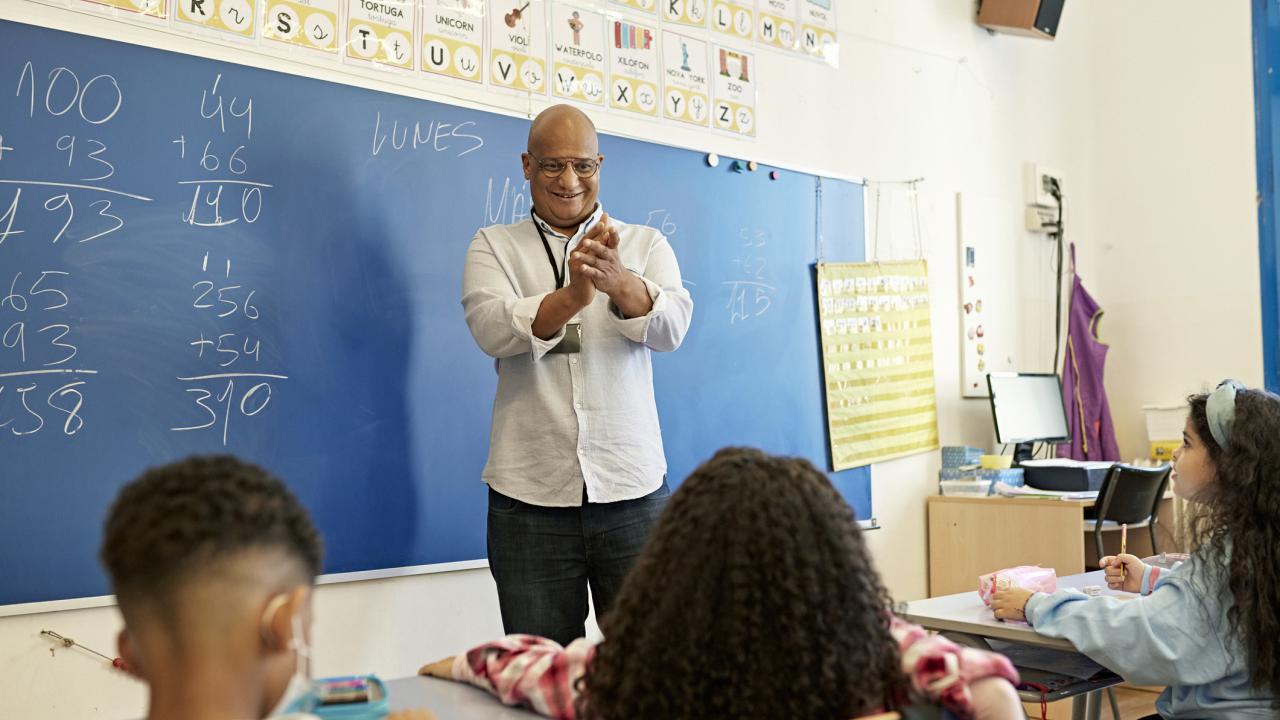
The 5:1 ratio has completely changed my thinking about interactions in the classroom. It all started with a question about grading. After all, part of our jobs as teachers is to provide corrective feedback to help students grow. The 5:1 ratio helps to ensure that students can receive this feedback effectively. More importantly, however, it can help us be intentional about creating a classroom environment that centers our humanity.

Time for Teachers: Self-Assessment with Community Support as Individual Solutions
 Ed Timke
Educators often cite a lack of time as one of their most significant stressors. How can we help teachers find the balance necessary to feel satisfied in their jobs and meet their social and emotional needs? This third post in the Time for Teachers blog series will discuss the importance of a self-assessment in addressing individual problems and solutions teachers face. This is not to say the onus of addressing challenges should fall squarely on the shoulders of individual teachers. Teachers need a community of practice and support to help them identify problems they might face individually that could benefit from solutions that come from consulting with colleagues.
Time for Teachers: Agile Meetings and Short Pulse Surveys as Systemic Solutions
Ed Timke
Educators often cite a lack of time as one of their most significant stressors. How can we help teachers find the balance necessary to feel satisfied in their jobs and meet their social and emotional needs? This second post in the Time for Teachers blog series will discuss two possible solutions that can help all educators save time while addressing needs to serve students and communities: agile meetings and short pulse surveys.



Time for Teachers: Importance of Distinguishing Systemic from Individual Barriers and Solutions
 Michigan Virtual Learning Research Institute
Educators often cite a lack of time as one of their most significant stressors. How can we help teachers find the balance necessary to feel satisfied in their jobs and meet their social and emotional needs? This first post in the Time for Teachers blog series will distinguish systemic from individual barriers, which is essential to ensure that finding time for themselves is not an undue burden on individual teachers. Some challenges require state-, district-, and school-wide solutions.

10 New Year’s Resolutions for Teachers in 2022
 Michigan Virtual
From filling your bucket to creating boundaries, we created these resolutions to guide you during this irregular year.

Connecting Teachers: A Community of Practice
Michigan Virtual Learning Research Institute
True collegial groups among teachers, in any context, still remain the exception and not the norm in many schools — especially for online teachers.



An Open Letter to the Teachers Who Changed Our Lives
Michigan Virtual
We asked our staff to tell us about a teacher who changed their lives for the better. The patterns that arise in their responses are cause for inspiration. They reveal that one amazing teacher can change the course of a student’s life forever. We are all the living legacies of this truth.

How Does Online Learning Really Work?: A Conversation with Mitch Albom
Michigan Virtual
In celebration of our 20th anniversary, we hosted four panel discussions on Mitch Albom's radio show on WJR 760. In this segment, Mitch Albom explores the day-to-day realities of virtual education in depth with a panel of our online teachers and students.

The Students of Today & Tomorrow: A Conversation with Mitch Albom
Michigan Virtual
What does the future of learning look like? In this segment of his radio show on WJR 760, Mitch Albom explores this issue in depth with a panel of the leaders of several current and former superintendents of Michigan schools.

What's Getting in the Way of Progress in Michigan's Education System?: A Conversation with Mitch Albom
Michigan Virtual
In celebration of our 20th anniversary, we hosted four panel discussions on Mitch Albom's radio show on WJR 760. In this segment, Mitch Albom explores barriers to progress in Michigan's educational system with a panel of the leaders of several of Michigan's educational organizations.

Why Are Michigan's Literacy Rates So Low?: A Conversation with Mitch Albom
Michigan Virtual
In celebration of our 20th anniversary, we hosted four panel discussions on Mitch Albom's radio show on WJR 760. In this segment, Mitch Albom explores Michigan's literacy crisis in depth with a panel of the educational leaders in Michigan's early literacy movement.

Michigan's Literacy Crisis is a Public Health Crisis
Michigan Virtual
Who suffers when our literacy rates are low? In this blog post by Tamara Bashore-Berg, we dive into the startling reality of Michigan’s literacy crisis and explore Dr. Nell Duke's argument that this issue is, at its heart, a public health crisis.
Subscribe to our blog!
Categories
- Accessibility (3)
- Artificial Intelligence (27)
- Blended Learning (42)
- Bright (45)
- EdTech (6)
- Esports (1)
- Homeschool (11)
- Instructional Design (12)
- Leadership (41)
- Mentoring (9)
- Online Learning (63)
- Online Teaching (9)
- Podcasts (103)
- Professional Development (16)
- Research (253)
- Restorative Practices (3)
- School Leader Insights (22)
- Social Emotional Learning (27)
- Student-Centered Learning (22)
- Summer Learning (6)
- Teacher Recruitment & Retention (4)
- Teacher Spotlight (1)
- Teaching (23)
- Tips and Tools (27)
- Uncategorized (0)
- Web 3.0 (3)