

37 Black History Month resources for teachers

Did you know a teacher started Black History Month?
It’s only appropriate, then, that we compile a list of unique Black History Month resources for educators.
But first, let’s go back to the beginning. It all started in 1915 with Carter G. Woodson.
"Woodson was dedicated to making African American history accessible to the everyday person. He wanted African Americans, and all Americans, really, to know the African American story and to see themselves in it because representation is power.”
— Noelle Trent, National Civil Rights Museum
Born to illiterate parents who were formerly enslaved, Woodson helped out on the family farm. As a teenager, he helped support his family by working in the coal mines of West Virginia.
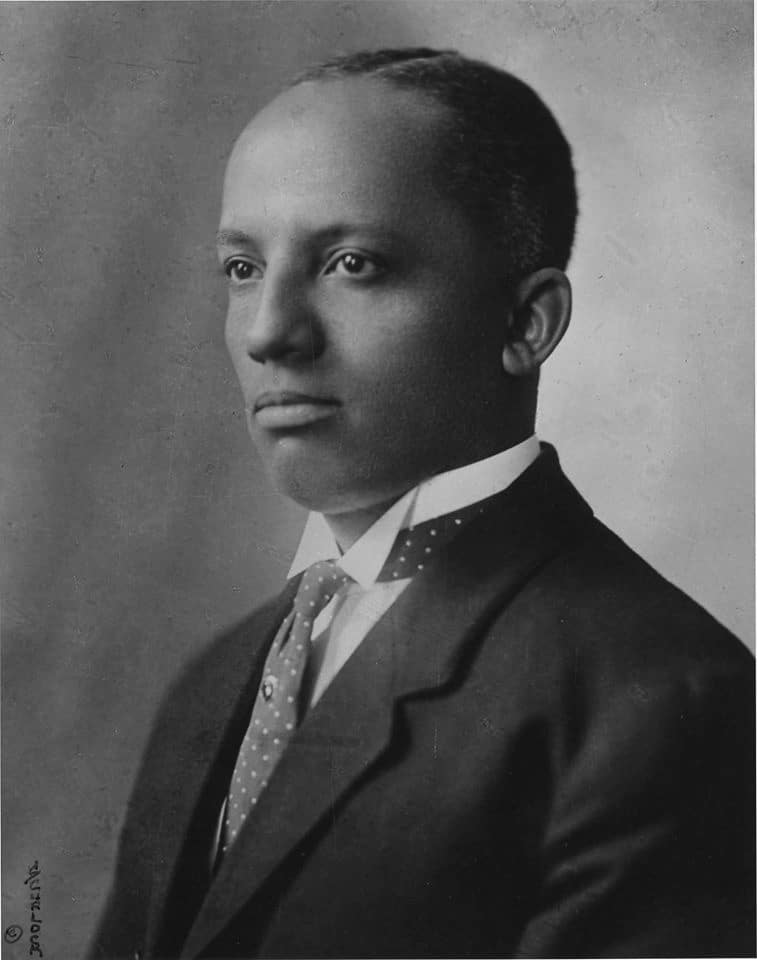
Dr. Carter G. Woodson (1875-1950), Carter G. Woodson Home National Historic Site, 1915.
Education was everything to Woodson. His formal learning was intermittent, and he entered high school at age 20 and graduated two years later.
Woodson became a teacher and then a school principal. He pursued higher education and became the second African American person to earn a doctorate degree at Harvard University.
An esteemed educator and author, Woodson paid his dues to be a part of the American Historical Association, but he was barred from attending their conferences. History, as he saw it, failed to include the African American experience.
Resolved to include African American history in education, Woodson and a group of African American men founded the Association for the Study of Negro Life and History (now called the Association for the Study of African American Life and History). This provided African American scholars with research and publication outlets.
“Seize the opportunity to honor the too-often neglected accomplishments of Black Americans in every area of endeavor throughout our history.”
— President Gerald Ford
A decade later, Woodson initiated Negro History Week to coincide with the birthdays of Frederick Douglass and Abraham Lincoln. In 1969, students and educators at Kent State University proposed a full month. Seven years later, President Gerald Ford publicly recognized this proposal, and finally, in 1986, Congress designated the month of February as National Black History Month.
And, to think, it all started with a teacher.
As you peruse the following list, remember to incorporate these resources throughout the year. Edutopia offers excellent advice on how to make your classroom more culturally responsive, and Michigan Virtual offers a free, SCECH-bearing professional development course called “Anti-Racism and Social Justice in Teaching and Leadership” to incorporate this mindset in your teaching.
Below, you will find unique Black History Month resources for teachers and a few special Michigan-specific resources to use in face-to-face or virtual classrooms.
Thank you to Michigan Virtual Instructor Marie McDonald; Diversity, Equity, and Inclusion (DEI) Coach Tanya Cross; Director of Instruction Andrea McKay; and Assistant Director of Continuous Learning Emily Sicilia for contributing to this list. Additionally, a big thanks to DEI Committee member Terence Wilkerson and BRIGHT podcast host Nikki Herta for reviewing this material!
Please note: These resources have not been thoroughly vetted, so please use your best judgment. Are we missing something? Let us know!
Black History Month Resources
Black History Month slideshow
(Michigan Virtual Social Studies Instructor Marie McDonald teaches African American History and has generously provided this slideshow. Teachers can use any of this material in their courses!)Youth Speak virtual stage at The Wright in Detroit (video contest)
Separate but equal case in Michigan (audio and text)
Historically Black (podcast)
Swing dancing and jazz (primary source set)
Digital collections at the Library of Congress (primary sources list)
Exhibits and collections (primary sources list)
African American artists and projects for the classroom (article)
4 Black History Month must-haves (article)
Documentaries to watch (video)
The first African American women army corps unit deployed overseas in WWII (videos, photos)
Portraits of African Americans (photos)
The Civil Rights Act of 1964 (teacher guide)
NEA Black History Month (lesson plans)
The historical roots of hip hop (lesson plan - register for free to access)
Free classroom posters (printables)
Black History Month coloring pages (printables)
Trans-Atlantic slave trade (interactive)
Segregation and the Life of Henrietta Lacks learning lab (interactive)
Rosa Parks virtual student workshop (grades 5-8) (interactive)
Cut-and-paste Civil Rights Movement project (activity)
One of the first African-American women to receive a patent (activity)
Comparing Civil War recruitment posters (activity)
Black History Month journal prompts (activity)
Black History Month crossword puzzle (activity)
Fannie Lou Hamer and voting rights (activity)
Jeopardy board: African American firsts in sports (activity)
Anti-racism resources for all ages (Padlet)
The photos above were taken in Idlewild, Michigan in September 1938. Idlewild, known as "the Black Eden," was a resort community that catered to African Americans, who were excluded from other resorts prior to the passage of the Civil RIghts Act of 1964. Check out resource #4 and #12 to learn more.

Sarah Hill
Sarah believes words have the power to build community. She has been writing and editing professionally for more than a decade. Sarah earned her bachelor’s degree in English from the University of Missouri-Kansas City and her master’s degree in rhetoric and composition, as well as a scholarly publishing certificate from Arizona State University. Sarah lives in Austin, Texas and spends most of her time supplying her toddler with snacks.
Related Posts

From Simple Squares to Sweaters: How One Teacher Uses Crochet to Build Confidence
When Erica Gorzen’s students pick up a crochet hook, they choose their own path. Some make simple squares. Others create sweaters and stuffed toys. As the 2026-2027 Regional Teacher of the Year, this Portland High School art teacher shares how choice-based lessons help her students build confidence, independence, and a love of learning that lasts well beyond the classroom.
Build Trust, Boost Autonomy, & Design Smarter Check-Ins With Students
Strong student relationships don't happen by chance. They happen by design. Discover how structured check-ins can build trust, strengthen student autonomy, and help you create more student-centered learning experiences. Plus, access a free template or earn a SCECH while creating a check-in routine for your classroom.
Revisiting the 5:1 Ratio: Reflecting on a "Magic" Ratio Just Too Tidy to be True
A popular idea in education holds that teachers should aim for five positive interactions for every one corrective one. It spread quickly, cited widely, and seemed to just make sense. There was only one problem: the research behind it was never really about teaching at all.

Street Data and Empathy: Revealing What Educators Truly Want from Professional Learning
What do educators actually WANT out of their professional learning experiences? This is a question my colleague Danielle, who contributed...

A Framework for Empathy: 3 steps leaders can follow to center educators’ Needs and Wants
Part 1 of this blog series digs into the results of a survey on what educators need and want from their professional learning experiences. Here in Part 2, we show you the framework we used to create and conduct the survey as well as provide you with ideas for implementing this framework in your own context. Special thanks to my colleague, Danielle Peck, who contributed significantly to this study and the writing of these blogs.

Mastering the email game: Three hacks for getting students to ACTUALLY read & reply to your emails
Discover the art of successful email communication with students. By following these three proven email hacks, you’ll stop sending emails that result in crickets and instead create authentic, engaging digital communications that foster rapport between you and your students.