

Mastering the email game: Three hacks for getting students to ACTUALLY read & reply to your emails

There are many challenges present in using technology to connect with students.
Indeed, one particularly daunting hurdle lies in establishing authentic, engaging digital communications.
Connecting with students can be difficult if all communication occurs solely through email. How do you know if your students are opening your emails, reading them, or even receiving them if they aren’t replying back?
Below I’ll share three hacks we’ve found incredibly effective for getting students to read and reply to emails!
Hack #1: Use a personalized subject line
The first step is getting your students to open your emails. In the English classroom, teachers often suggest that students start a paper with a hook to grab the reader's attention.
Email follows the same principle. Create an interesting subject line to get students to open and read your message.
One idea to intrigue students to open your email is to use the student’s name in the subject line. This shows students that it is not an automated or generic email.
Especially if your students are enrolled in online classes, their inboxes quickly fill up with emails such as progress checks, weekly check-ins, or class updates. Most of those are generic messages.
When the message is personalized for a specific student, they are more likely to open them.
Another suggestion is to start with something positive. The message’s subject line should entice students to open it. Try using exclamation points or emojis such as “Finish Strong 💪🏻.”
Hack #2: Offer a simple way for students to respond
Now that students are opening their messages, how can we ensure they are actually reading them?
The truth is students who are consistently engaged in their courses and doing well may NOT reply to your emails. We all know how busy students can get, so they may not send you a response unless they need something.
An effective strategy for encouraging engagement in emails to students is asking students to copy and paste a reply using pre-made sentences.
This strategy simplifies the response, making the process quick and easy for students. Having the premade replies ready for students to use also makes it clear to students that you want a reply.
Hack #3: Add some sparkle to your communication style
While it can be challenging to connect with students through technology, it is far from impossible. The goal is to connect with students, so it’s important to remember that not all communication has to be academic.
Especially if your students are fully virtual, they may not have as many opportunities to communicate with friends or peers. Change up your communication style and build good rapport with your students to enhance the classroom community and teacher-student relationships.
To vary up your communication style, try a joke or interesting fact of the week.
Consider the style of your text as well. Use CAPS, bold, italicized, and underlined words to add emphasis.
You can also try adding some memes, color, or bitmojis into your messages.
The Bottom Line
Though email communication with students certainly can be challenging, it's not impossible.
Make your subject line pop to grab your student's attention and don't forget to let your personality shine through!
You’ve got this! By following these three hacks, you’re sure to up your email game.
Try these strategies out for yourself and watch on in wonder as your emails stop resulting in crickets and instead begin fostering genuine rapport between you and your students.

Jonelle Barker
Course Design and Development Specialist
Jonelle Barker started working at Michigan Virtual in October 2021. She enjoys working and supporting students. Prior to working at Michigan Virtual, Jonelle worked at an elementary school as an at-risk teacher. She lives in Howell with her husband, two children, and their dog. Outside of work, she enjoys spending quality time with her family.
Related Posts

From Simple Squares to Sweaters: How One Teacher Uses Crochet to Build Confidence
When Erica Gorzen’s students pick up a crochet hook, they choose their own path. Some make simple squares. Others create sweaters and stuffed toys. As the 2026-2027 Regional Teacher of the Year, this Portland High School art teacher shares how choice-based lessons help her students build confidence, independence, and a love of learning that lasts well beyond the classroom.
Build Trust, Boost Autonomy, & Design Smarter Check-Ins With Students
Strong student relationships don't happen by chance. They happen by design. Discover how structured check-ins can build trust, strengthen student autonomy, and help you create more student-centered learning experiences. Plus, access a free template or earn a SCECH while creating a check-in routine for your classroom.
Revisiting the 5:1 Ratio: Reflecting on a "Magic" Ratio Just Too Tidy to be True
A popular idea in education holds that teachers should aim for five positive interactions for every one corrective one. It spread quickly, cited widely, and seemed to just make sense. There was only one problem: the research behind it was never really about teaching at all.

Street Data and Empathy: Revealing What Educators Truly Want from Professional Learning
What do educators actually WANT out of their professional learning experiences? This is a question my colleague Danielle, who contributed...

A Framework for Empathy: 3 steps leaders can follow to center educators’ Needs and Wants
Part 1 of this blog series digs into the results of a survey on what educators need and want from their professional learning experiences. Here in Part 2, we show you the framework we used to create and conduct the survey as well as provide you with ideas for implementing this framework in your own context. Special thanks to my colleague, Danielle Peck, who contributed significantly to this study and the writing of these blogs.
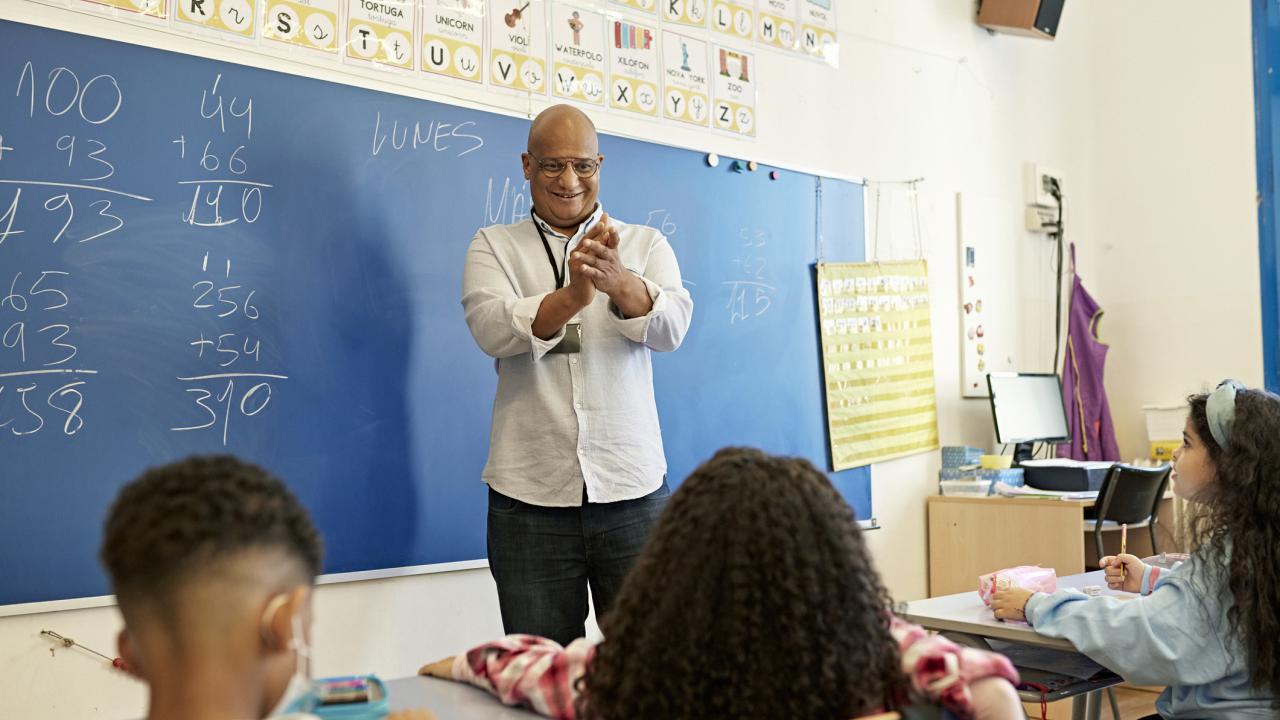
The Power of the 5:1 Ratio: How Fostering Positive Interactions Can Transform Student Learning
The 5:1 ratio has completely changed my thinking about interactions in the classroom. It all started with a question about grading. After all, part of our jobs as teachers is to provide corrective feedback to help students grow. The 5:1 ratio helps to ensure that students can receive this feedback effectively. More importantly, however, it can help us be intentional about creating a classroom environment that centers our humanity.