

Leadership Coaching for Innovation Part 3

Part 3: Michigan School District Spotlights
Part 3 of a 3 Part Series
By Dr. Tovah Sheldon & Guest Writers
In Part 1 of this 3-part series, we explored Michigan Virtual’s Innovator’s Journeys as a way to make innovation visible and learnable. We also saw it wasn’t linear, and innovation isn’t a solo act.
Then, in Part 2, we clarified what Leadership Coaching for Innovation is and is not, and learned about the research on why it works.
Now, three leaders are sharing what actually has happened in their experience with Leadership Coaching for Innovation. Read on to hear the real stories of innovation, growth, and change in three Michigan schools:
- Brown City Community Schools by Brad Hale, Brown City Jr./Sr. High School Principal
- Frankenmuth School District by JoLynn Clark, Frankenmuth Superintendent
- Howell Public Schools by Jason Schrock, Howell High School Principal
Brown City Community Schools
By Brad Hale, Brown City Jr./Sr. High School Principal

As the 7–12 principal in Brown City, also the community that raised me, I feel a deep responsibility to ensure our students are prepared not just for graduation, but for life beyond our small rural town. Brown City has strong roots, many of which are historically tied to employment with the Big Three. As those opportunities have shifted, so has our responsibility as a school system. We are called to help students become adaptable, innovative thinkers who can find success wherever life takes them, while still feeling connected to and capable of contributing back to the community they call home.
In a small district like ours, serving approximately 350 students in grades 7–12, we’ve learned to be creative with limited resources. That creativity has led to unique opportunities for students, including our Algebra & Manufacturing and Geometry & Construction courses, where students earn math credit while applying their learning through hands-on, real-world projects. Most recently, we’ve continued that innovation by redesigning our once state-renowned Auto Shop into a multi-trade, hands-on learning environment that better reflects today’s workforce needs.
Through my work in Leadership Coaching for Innovation and MASSP’s Innovative Leaders Network second-year cohort, I’ve been focused on a foundational question: What do we want a Brown City graduate to look like? While we’ve continued to innovate in meaningful ways, I realized we weren’t always sustaining that innovation because we lacked a clearly defined direction. We were doing great things, but not always connecting them in a way that built toward something bigger for our students and our district.
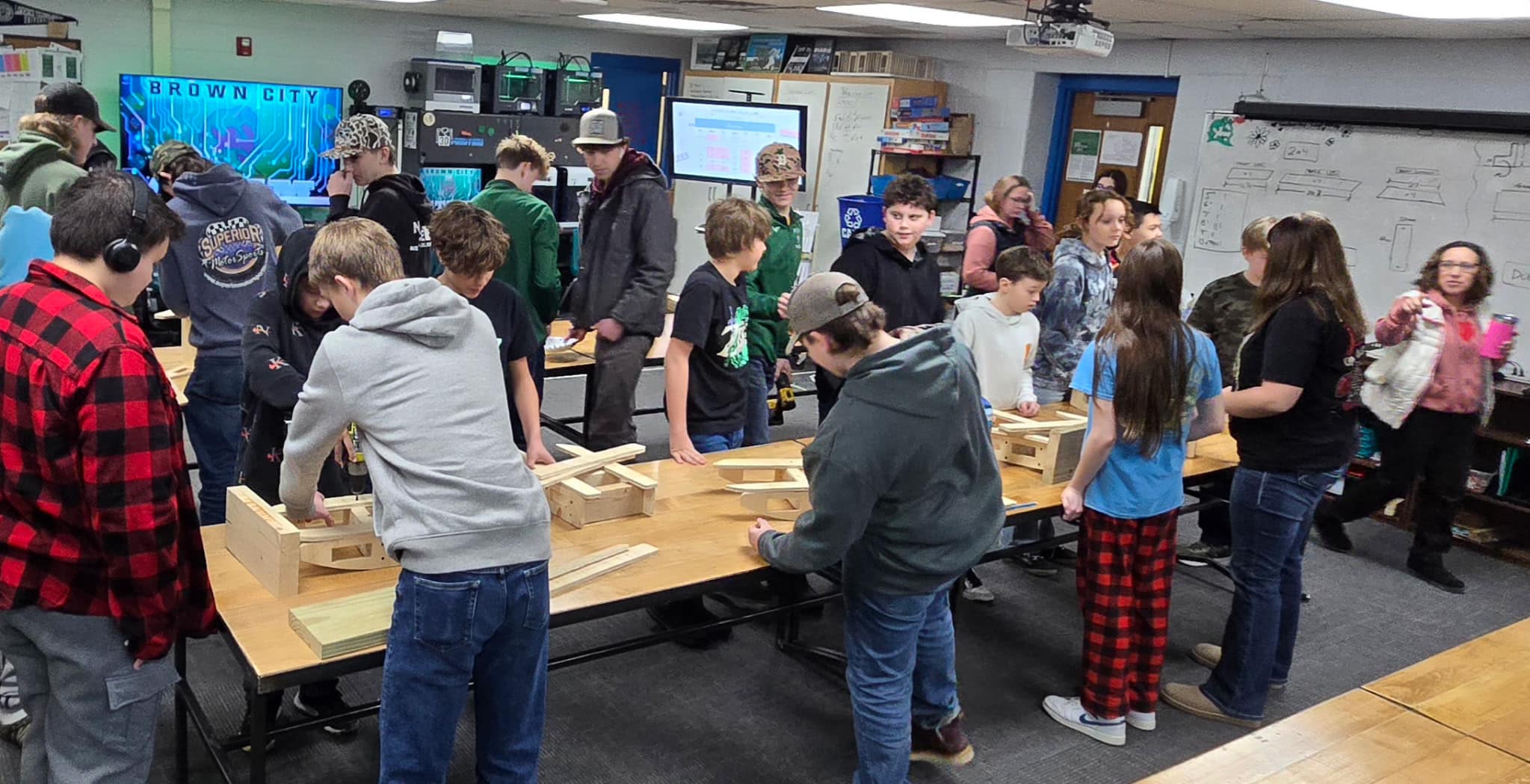
Brown City High School's STEM class helps sixth-graders make sleds for their art class.
That realization led us to begin developing a Portrait of a Brown City Graduate. This work will become our anchor and give stronger clarity to the innovation already happening while also expanding our vision of where we want to go next. Through this process, we are identifying the key traits we want every graduate to embody—students who can think critically, solve real-world problems, communicate effectively, and collaborate with others. We are also working to define what those traits look like at each grade level so that this vision is lived out across our entire K–12 system, not just at the high school level.
Leadership Coaching for Innovation played a critical role in moving this from an idea to action. My coach, Newaygo Superintendent Ben Gilpin, has been a strong thought partner who not only helps push my thinking, but also provides the accountability that’s often needed in the busy, reactive world of school leadership. Through this work, I’ve also been able to expand my connection with innovative leaders beyond our region. One of the most impactful experiences was visiting Buddy Berry’s district in Eminence, Kentucky.
The similarities between our communities were striking, and seeing how his team created a centralized EdHub to support student learning helped reinforce that what we are building in Brown City is both meaningful and attainable. One of the biggest outcomes from this whole, larger innovator's journey has been our successful application for a $50,000 MiSTEM Mini Grant.
This will allow us to begin reimagining our library space into a central hub for 3P learning—bringing STEM resources, collaboration, and hands-on opportunities to the center of our 7–12 building. This space will support not only our current programs, but also help expand opportunities for all students to engage in meaningful, career-connected learning experiences. We have also applied for the 61V CTE Expansion Grant as we continue to grow our programs and align them to the needs of our students and community.
This work is still ongoing, but we now have a clear path forward. What excites me most is that this is not about adding more to our plate—it’s about connecting and strengthening the great work already happening in Brown City.
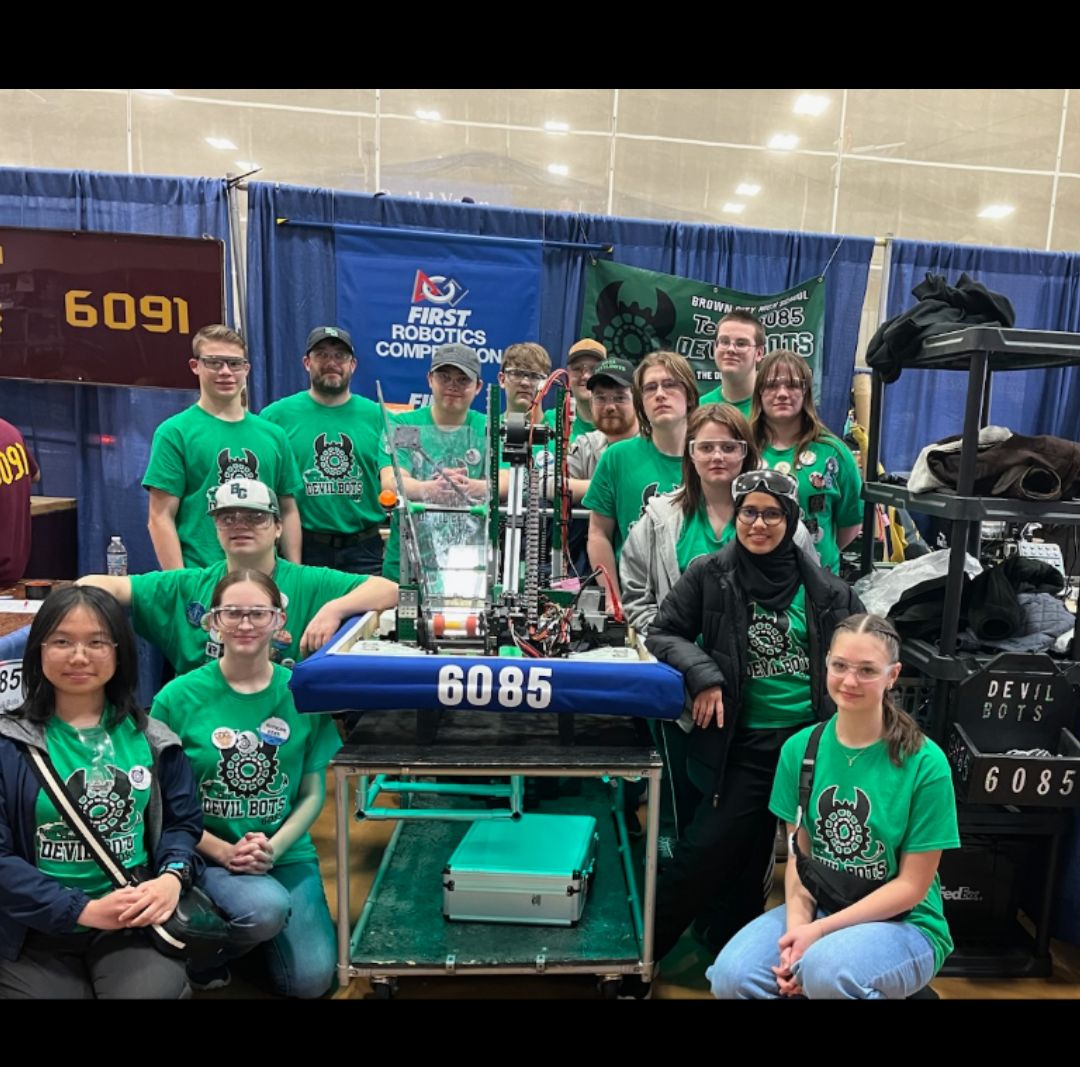
Brown City Community Schools' robotics team, Green Devil Bots, wins first place in the Alliance 7 competition in March 2025.
Leadership Coaching for Innovation has helped me grow not just in one specific area, but across my role as a whole. More than anything, it has reinforced a belief I hold strongly: great schools are built on great relationships. I’m grateful for the partnership, and even more excited about where this work is taking our students, our staff, and our community.
Frankenmuth School District
By JoLynn Clark, Frankenmuth Superintendent

In Frankenmuth School District, we often describe ourselves as a traditional school district with extraordinary opportunities. Our students come from families that value education, our staff is deeply committed to doing what’s best for kids, and our community consistently shows up in support. That combination has led to strong outcomes over time.
But it has also challenged us to ask an important question: Are we satisfied with maintaining what’s been successful, or are we willing to stretch toward what’s possible?
That question has driven much of our recent innovation work.
For several years, we’ve centered our efforts around a simple but powerful idea: preparing every student for their “What’s Next.” That focus has pushed us to think more intentionally about personalized pathways, ensuring each student graduates not only with a diploma, but with a clear, viable plan and meaningful experiences that give them an advantage.
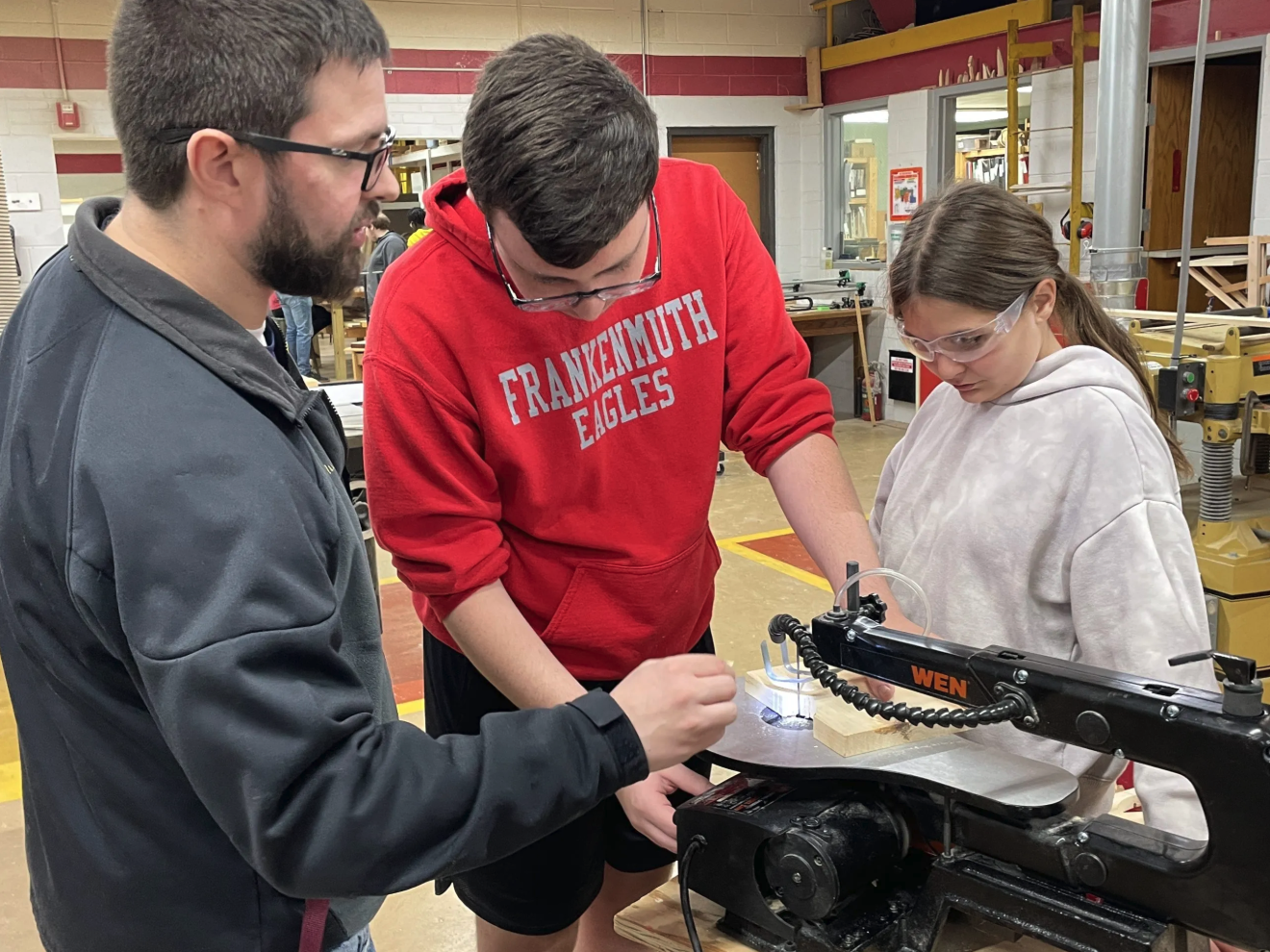
Frankenmuth students working on a project in woodshop class.
Along the way, we’ve also explored ways to elevate the student experience through “surprise and delight” moments and deeper learning design, inspired by models like High Tech High. One example of this work that is just getting underway is a new collaboration with the Bavarian Blast waterpark. This month, our teachers are engaging in on-site visits to tour the facility and begin designing authentic, place-based learning experiences connected to the park’s many facets and functions.
At the elementary level, this opens the door for science observation, measurement, and literacy connections as students describe, document, and make sense of real-world experiences.
At the middle level, it creates meaningful STEAM opportunities, including water quality analysis, velocity, and systems thinking. At the high school level, students can explore advanced applications across physics and mathematics, while also engaging in marketing, design, and the arts to understand the full experience of how a destination like this operates. Together, this partnership reflects our commitment to making learning relevant, connected, and grounded in real experiences. The goal is not to abandon tradition, but to build on it, honoring what has worked while creating space for more engaging, relevant, and individualized opportunities.

Frankenmuth student working to complete the FAA Aviation Drone course in preparation to test for a FAA Part 107 Drone Pilot's License.
Leadership Coaching for Innovation has been a key factor in helping me move from ideas to action. As I transitioned this year from high school principal to superintendent, having Dr. Carrie Wozniak as my “just-right-fit” coach has provided the insights and thought-provoking encouragement I needed. She brings both building- and system-level leadership experience, and having ongoing conversation around this work from that district-level lens has been invaluable.
Leadership Coaching for Innovation has provided not just encouragement, but structured thinking, accountability, and divergent perspectives. It has helped me zoom out to see the bigger picture while also identifying practical next steps that move innovation forward in manageable ways.
Perhaps most importantly for me, the Leadership Coaching for Innovation process has reinforced that innovation doesn’t have to mean massive, disruptive change. It can start with small, intentional shifts in how we think about student experiences, staff collaboration, and community engagement.
Over time, those shifts build momentum. In a district like Frankenmuth, where the foundation is already strong, Leadership Coaching for Innovation pushes us beyond sustaining the tradition of excellence in education and into continually asking the question that matters most: What’s our What’s Next?
Howell High School, Howell Public Schools
By Jason Schrock, Howell High School Principal
I’ve come to believe that leadership coaching is something every leader should experience. In fact, one of my honest takeaways has been, I wish I had access to this kind of support years ago! After 14 years as a principal, I’ve learned a lot through experience (some call it trial by fire), but this process has reminded me that leadership is never something we fully “arrive” at. There is always more to notice, more to refine, and more to learn. That’s what has made Leadership Coaching for Innovation such a meaningful experience for me. It has created space for both curiosity and growth in a role that can often feel consumed by urgency.
One of the things I’ve appreciated most is that it has helped me think about innovation in a broader and more practical way. For me, innovation hasn’t just been about launching massive initiatives. It has been about building intentional systems, effective structures, and divergent experiences that make school better for students and staff in real, tangible ways.
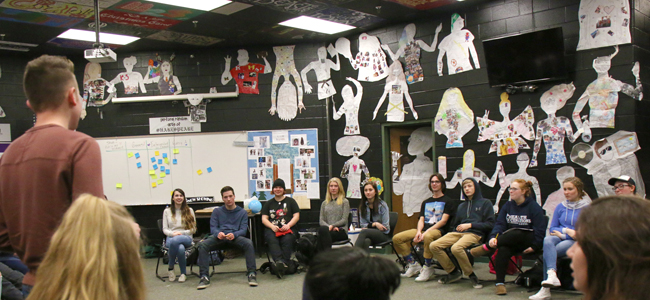
Howell High School students in drama class.

Students in the Howell High School aviation program.
At Howell High School, two examples stand out since I’ve started Leadership Coaching for Innovation. The first is Bridge Builders. We developed a student leadership series to invest in student leaders and help students grow in self-awareness, empathy, and influence.
The work is deeply rooted in restorative practices and community building, with the goal of helping students become the kind of leaders who strengthen connection and culture within our school. For some, that may not seem “innovative” enough, but for Howell, we came to this conclusion through noticing, listening, and prioritizing our community values… students and families. Then, we capitalized on the design process, keying in on building, testing, and refining. The program isn’t perfect, but we are better now than we were, and we will keep designing and iterating with students at the center of the process.
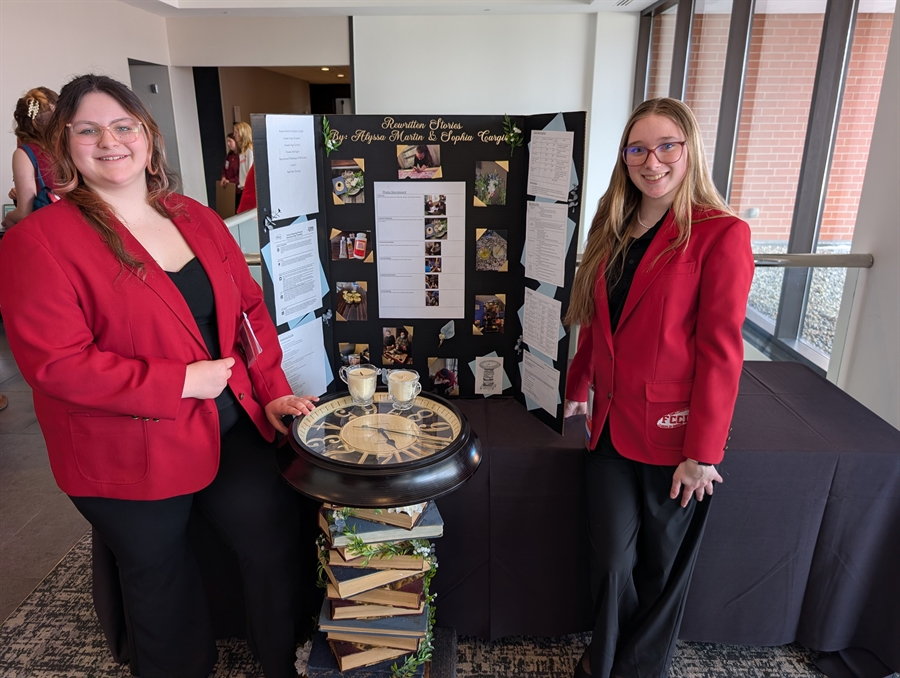
Howell High School FCCLA members earn gold at State Leadership Conference.
The second example is planning to bring the 9th-grade campus back to the main high school campus, including developing intentional 9th-grade teams to better support belonging, transition, and academic success. Every community, district, and school has structures, visible and invisible, that help and hinder belonging, transition, and student success; we just chose to examine Howell’s with curiosity and through a lens of innovation. Both of these initiatives matter because they get at the heart of what we want school to feel like for students. We want students to feel known, connected, and equipped to contribute. We also want our adults to live that and to have the structures, relationships, and clarity needed to support them well. It is one thing to want these things… it is another to do it!
Working with my ‘just-right-fit’ coach, Dr. Tovah Sheldon, has been incredibly valuable in both of the examples above, beyond the named innovations we are working on. One of the best parts of coaching has been having space to “brain dump” the many moving pieces that come with leading a high-caliber high school. But what I’ve appreciated even more is that she never lets those conversations stay abstract. She has helped me take what can feel messy or overwhelming and move it toward next steps that are tangible, rooted in reflection, and aligned with my purpose and goals.
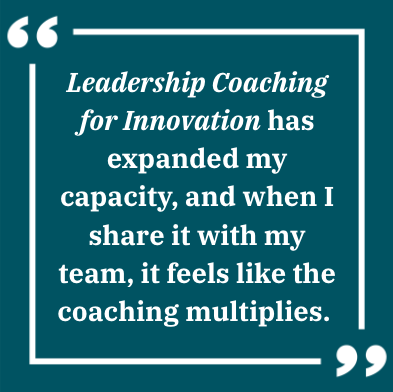
She also brings tools and frameworks that I can use personally. I also often share those resources directly with my team. Leadership Coaching for Innovation has expanded my capacity, and when I share it with my team, it feels like the coaching multiplies. Leadership Coaching for Innovation has helped me grow in a few key areas: slowing down enough to reflect before reacting, staying anchored in purpose instead of urgency, and being more intentional about moving ideas from vision to implementation. It has also reinforced the importance of prototyping, listening, and creating structures that invite others into the work.
The biggest outcome for me has been greater clarity. I’m seeing stronger student leadership development through Bridge Builders, and I feel more prepared and intentional as we navigate a significant transition for our incoming ninth graders. More than anything, this experience has reminded me that, just like leadership itself, this process is personal, sometimes messy, but most of all encouraging.
Each innovation is different. Each leader is different. Each community is different… Each Innovator’s Journeys are different … That is where Leadership Coaching for Innovation can make all the difference.
Author's Note
We will continue to share spotlights on innovation in schools and districts by highlighting the incredible leaders who have experienced Leadership Coaching for Innovation. If you have a story about your innovator’s journey that we can spotlight, reach out to Dr. Tovah Sheldon and share it! Remember, collaboration is the ‘super habit’ that shows up everywhere.
For a conversation about Leadership Coaching for Innovation and how that might support you and innovation in your space, visit our website: https://michiganvirtual.org/consulting/leadership-coaching-innovation/, complete the form, and we will set up a time to connect.
About the Author
Dr. Tovah Sheldon
Michigan Virtual School Design Strategist
For more than 20 years, Dr. Tovah Sheldon has served education as a teacher, professor, administrator, researcher, leadership coach, and consultant across pK-12 and higher education. She has a passion to cultivate constructive relationships, bring innovation to spaces that are managing complex change, and support implementation of evidence-based practices that promote equity and opportunity for all. Her demonstrated expertise ranges from curriculum, instruction, and assessment to professional development, capacity building, strategic planning, and system’s iteration for growth and sustainability. Dr. Sheldon has also served on various boards from within her community of Jackson and across the state of Michigan. Dr. Sheldon earned her Ph.D. from Michigan State University in Curriculum, Instruction, and Teacher Education.

Michigan Virtual
For more than 27 years, Michigan Virtual has partnered with K–12 school districts across Michigan to expand learning opportunities for students and educators alike. Through our high-quality online courses, taught by Michigan-certified, highly qualified teachers, we empower students to learn anytime, anywhere. We also provide affordable, impactful professional development to help educators grow in their craft. Most recently, Michigan Virtual has been at the forefront of innovation and artificial intelligence in education, offering consultation services and professional learning to guide schools in thoughtfully integrating new technologies and learning pathways.
Related Posts

Choosing Your Next Right Move: How Metaphors Help District Leaders Build Alignment and Coherence in Their Complex Systems
Many districts are doing ambitious transformation work, yet one of the most common risks is not lack of effort. It is fragmentation. This article explores how alignment and coherence, brought to life through seven powerful metaphors, can help leaders see their systems more clearly and make better decisions about what to do next.
Beyond Resistance: Understanding & Using Change Sets to Support Transformation
Leading meaningful change requires more than the right mindset. It takes the right combination of skills, tools, coaching, and systems. Explore the Change Sets framework to uncover why transformation stalls, identify what people truly need to move forward, and lead change with greater clarity and purpose.
Portrait of a Graduate 201 Article 3
Many districts have already done the work of approving a Portrait of a Graduate, naming what they want students to know, do, and become. The harder question now is how that vision moves from approval into everyday practice.
Portrait of a Graduate 201 Article 2
Many districts have already done the work of approving a Portrait of a Graduate, naming what they want students to know, do, and become. The harder question now is how that vision moves from approval into everyday practice.
Portrait of a Graduate 201 Article 1
Many districts have already done the work of approving a Portrait of a Graduate, naming what they want students to know, do, and become. The harder question now is how that vision moves from approval into everyday practice.
Kinds of Thinking
We all have a default way of thinking and most of the time, we don’t even notice it. In a complex, fast-changing world, how we think matters just as much as what we think. Overusing one kind of thinking can quietly limit our decisions, our leadership, and our growth. Becoming more intentional about how we think is one of the most important shifts we can make.