
Using Piktochart in the Classroom

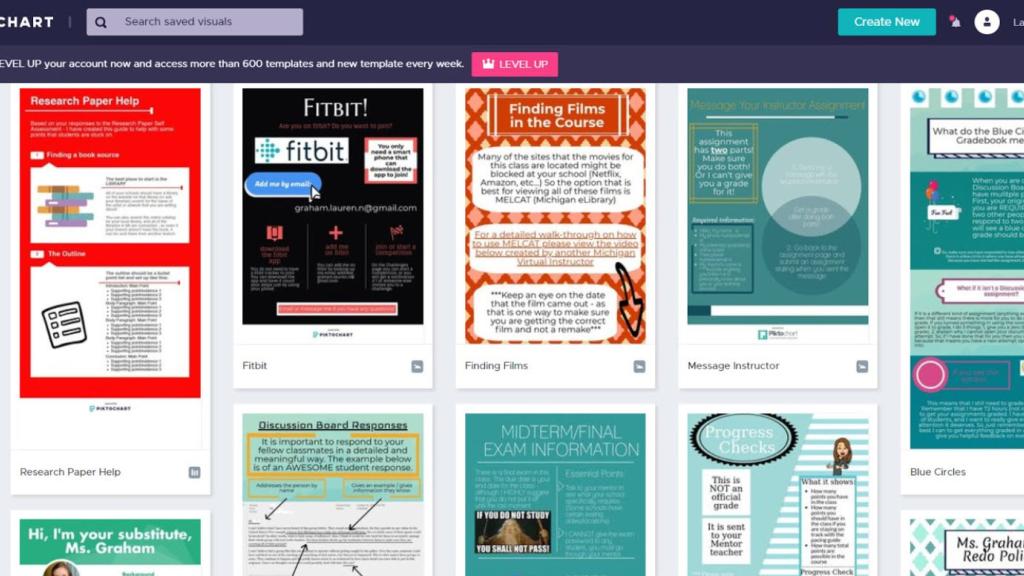
Some of my students were struggling with specific aspects of taking a course online, as well as certain assignments. They would send me emails that were along the lines of “I need help with the test I’m on right now,” to which I would have to reply, “Which test are you on? What are you having trouble with?” I wanted to cut out this part of the conversation and get right to helping them. So I decided to create a Piktochart that explained where they can look for FAQs and what they should include in a message when they reach out for help.
I also use Piktochart to share and examine examples of some assignments. Students in my classes were struggling with responding to each other over the online discussion board in meaningful ways. So I took a screenshot of a very well written response from a student and I used Piktochart to point out specific things that I wanted students to include in their responses. Students see this infographic every time that they open the Discussion Board page and since posting it I have seen a large increase in the quality of responses students write to each other. This tool would also be great for going over general assignment format, rubrics, citation formats, and much more.
Overall Piktochart has helped me create a way to share important information with my students in a way that they will interact positively with. I found that when I posted information in plain text my students would not read it. Piktochart allowed me to emphasize important information and create eye-catching announcements that students will actually read. Students have such a short attention span when it comes to reading that there is actually an acronym for it: tldr. This stands for “too long, didn’t read.” I create my infographics with this in mind, to ensure that my students are getting the important information they need to be successful in class.
With the help of Piktochart, my students are now clear on what I expect from them and they can focus on content rather than time-consuming class procedures. I have seen a diminished amount of simple questions that take the focus off the class material. I am so glad that I found this tool and I think that it would be beneficial for both online and face-to-face teachers to utilize.

Lauren Graham
Related Posts

From Simple Squares to Sweaters: How One Teacher Uses Crochet to Build Confidence
When Erica Gorzen’s students pick up a crochet hook, they choose their own path. Some make simple squares. Others create sweaters and stuffed toys. As the 2026-2027 Regional Teacher of the Year, this Portland High School art teacher shares how choice-based lessons help her students build confidence, independence, and a love of learning that lasts well beyond the classroom.
Build Trust, Boost Autonomy, & Design Smarter Check-Ins With Students
Strong student relationships don't happen by chance. They happen by design. Discover how structured check-ins can build trust, strengthen student autonomy, and help you create more student-centered learning experiences. Plus, access a free template or earn a SCECH while creating a check-in routine for your classroom.
Revisiting the 5:1 Ratio: Reflecting on a "Magic" Ratio Just Too Tidy to be True
A popular idea in education holds that teachers should aim for five positive interactions for every one corrective one. It spread quickly, cited widely, and seemed to just make sense. There was only one problem: the research behind it was never really about teaching at all.

Everyone Has a Story
Learn how one Michigan educator helps students connect with each other and with the power of storytelling. Back when I began teaching...
The Power of the 5:1 Ratio: How Fostering Positive Interactions Can Transform Student Learning
The 5:1 ratio has completely changed my thinking about interactions in the classroom. It all started with a question about grading. After all, part of our jobs as teachers is to provide corrective feedback to help students grow. The 5:1 ratio helps to ensure that students can receive this feedback effectively. More importantly, however, it can help us be intentional about creating a classroom environment that centers our humanity.

Time for Teachers: Self-Assessment with Community Support as Individual Solutions
Educators often cite a lack of time as one of their most significant stressors. How can we help teachers find the balance necessary to feel satisfied in their jobs and meet their social and emotional needs? This third post in the Time for Teachers blog series will discuss the importance of a self-assessment in addressing individual problems and solutions teachers face. This is not to say the onus of addressing challenges should fall squarely on the shoulders of individual teachers. Teachers need a community of practice and support to help them identify problems they might face individually that could benefit from solutions that come from consulting with colleagues.