

Parenting through trauma: What to do when things get difficult

Think of a time in your life when you felt totally overwhelmed.
Maybe you were grieving the loss of a loved one. Perhaps you or someone you know experienced severe physical pain or injury. Or it was the loss of a job. It could even be this current time of uncertainty we are facing now as a state and a nation.
Suddenly, many things you may have taken for granted seem at risk or out of your control. You may feel completely alone, wondering if and when things will be set right.
What is "trauma" and how does it affect our children?
These kinds of events can be traumatic. Trauma is defined as “an event, series of events, or set of circumstances that is experienced by an individual as physically or emotionally harmful or threatening and has lasting adverse effects on the individual's functioning and physical, social, emotional, or spiritual well-being.”
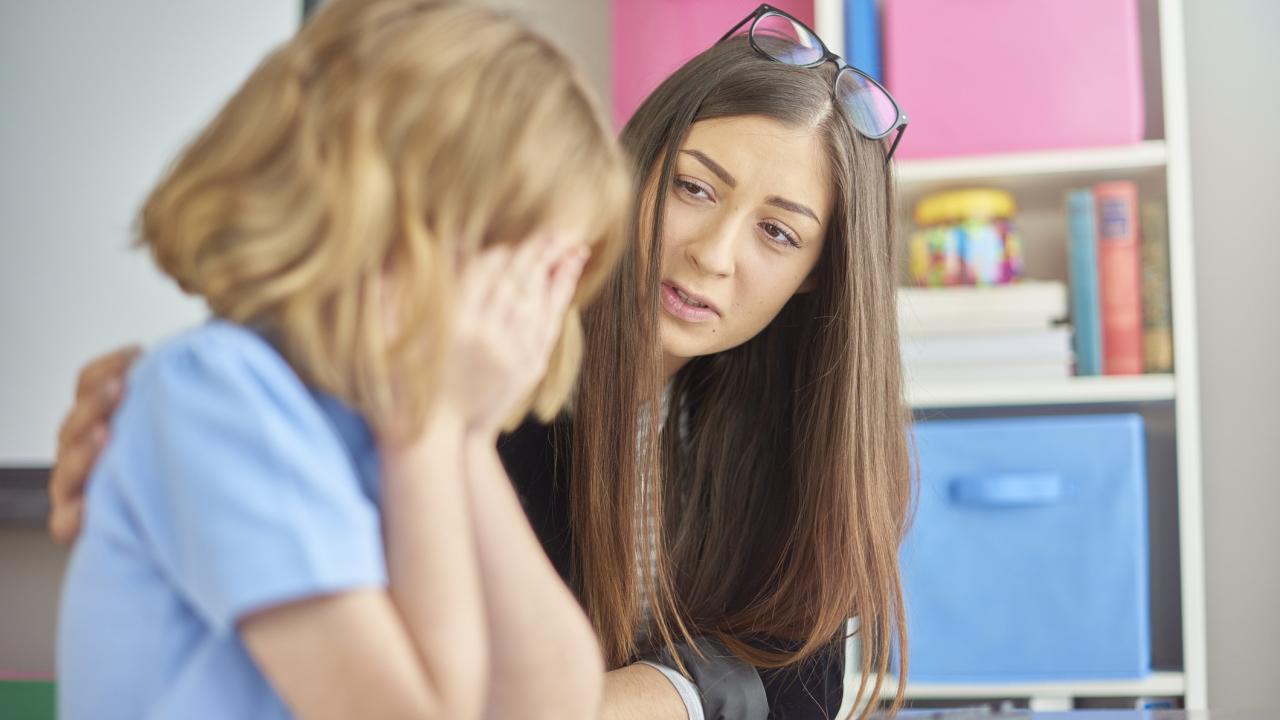
Children can be traumatized by events like the loss or separation from a loved one or prolonged disruption to routines.
These situations may be harmful or feel threatening to the youth, which could have a lasting effect on how they manage interacting with peers or adults, their ability to follow directions, as well as potential physical and emotional implications.
In our current situation, you could be facing a lot of uncertainty about the future of work and education, missing in-person contact with friends and extended family, and facing the potential loss of loved ones.
This can all take its toll. Many people are experiencing events that can have a lasting impact on their mental health.
One thing to keep in mind about trauma, however, is that it cannot be measured. How we perceive experiences and how we feel when going through those experiences are highly personal.
Events can impact different people in vastly different ways.
The ability to return to being healthy and hopeful after difficult situations is called resilience. It is important to help our children build resilience, even in a situation like we are experiencing now.
How do we build resilience?
Positive reinforcement and attention influence how children develop and mature.
The Washtenaw County Trauma Collaborative, on behalf of The Michigan Department of Health and Human Services, offers strategies on how to build resilience in youth.
As we’ve learned, trauma can impact the development of the brain.
Social-emotional learning (SEL) supports children who have experienced trauma as it helps them develop or improve their ability to recognize what they are feeling (self-awareness), manage those feelings individually (self-management), resolve any conflict peacefully (social awareness, relationship skills, and make good decisions (responsible decision-making).
Specifically, SEL can help youth who have experienced loss or trauma:
Develop skills to identify, talk about and regulate feelings
Build and enhance communication and social skills
Develop healthy coping skills to manage strong feelings and stress
Break down barriers to talking about difficult topics and advocate for needs
Promote safety skills in children that can act as primary prevention or buffer the experience of future trauma.
Here are some tips to help lessen your child’s experience of loss:
Keep up with your regular routine as much as you can.
Daily routines have likely changed quite a bit in the last month or so. Try to find a new normal, so your child knows what to expect throughout the day.
Using specific anchor points that remain the same each day can be helpful, such as mealtimes or dedicated times for play. Consider posting a schedule so everyone can see it and knows what to expect.
We all want to feel in control, especially in uncertain situations. Try to find areas where your child can make their own decisions, such as what clothes to wear, the sequence of their school work, what activities to do for brain breaks, etc.
Communicate expectations for desired behavior.
Acknowledge and reinforce when your child is behaving in a way that is positive and acceptable.
Offering praise can be as simple as saying, “I like the way you are focused and working hard on your assignment” or “Thank you for sharing with your sibling.”
It is also understandable that children will feel frustrated. Give them constructive, healthy ways to communicate these feelings.
Is it okay for them to hit a cushion? Is it okay to shout out loud when you are really angry? Is it okay to go into your room and close your door for some alone time?
Providing these outlets and limits will help them process their feelings.
Anticipate difficulties and provide additional support.
In the case that your child may experience the loss of a loved one or has a friend grieving a loss of their own, preparing to have delicate conversations can make them more effective if the need arises.
Resources from the National Alliance for Grieving Children can be helpful if needed.
Lastly, the following resources may be helpful when supporting children who are coping with trauma:
In the face of this pandemic, we’re all experiencing trauma in our own ways. It’s important to recognize the physical and/or emotional effects that this difficult situation is having on you and your family members.

Lauren Kazee
Lauren Kazee is the founder of LivingSLOW. Throughout her career as a licensed social worker, her efforts have focused on mental health and wellness for youth, inside and outside the school setting. She received her Bachelor of Social Work in 1993 and Master of Social Work in 1994, both from the University of Illinois in Chicago, Jane Addams College of Social Work. As a licensed professional, she worked in inner-city Chicago, rural communities in Ohio, and urban areas in Michigan as a school social worker and an outpatient therapist. Her experience within the mental health field and education system led to participation in various federal and state-funded projects throughout the state of Michigan, as well as opportunities to contribute to and support mental health efforts in other states.
Related Posts

A simple template for SEL check-ins
Using this simple template, our online instructors have learned a lot more about what’s going on in their students' lives, both sorrows and joys. This information can help teachers better connect with students and figure out what might be getting in the way of learning.

Time for Teachers: Self-Assessment with Community Support as Individual Solutions
Educators often cite a lack of time as one of their most significant stressors. How can we help teachers find the balance necessary to feel satisfied in their jobs and meet their social and emotional needs? This third post in the Time for Teachers blog series will discuss the importance of a self-assessment in addressing individual problems and solutions teachers face. This is not to say the onus of addressing challenges should fall squarely on the shoulders of individual teachers. Teachers need a community of practice and support to help them identify problems they might face individually that could benefit from solutions that come from consulting with colleagues.

Time for Teachers: Agile Meetings and Short Pulse Surveys as Systemic Solutions
Educators often cite a lack of time as one of their most significant stressors. How can we help teachers find the balance necessary to feel satisfied in their jobs and meet their social and emotional needs? This second post in the Time for Teachers blog series will discuss two possible solutions that can help all educators save time while addressing needs to serve students and communities: agile meetings and short pulse surveys.
8 go-to SEL tools for teachers
Social emotional learning — also known as “SEL” — is a component of education that addresses the traditionally non-academic side of...

Do You Encourage Stigma?
It’s time to break through the stigma that comes with needing help to cope with mental and emotional challenges. Robust social-emotional...

How to Help Foster Self-Awareness in Students
Self-awareness is a skill that many adults, let alone kids, struggle with. Fortunately, however, this skill can be cultivated in youth...