
8 go-to SEL tools for teachers

Social emotional learning — also known as “SEL” — is a component of education that addresses the traditionally non-academic side of student development and learning.
The idea is that children should have ample opportunities to observe and practice the skills they’ll need to manage their social interactions and emotions as they grow into productive adults.
In this article, we’ll explore why SEL is so crucial for students and share some useful tools educators can use to integrate SEL into their classrooms.
Social emotional learning: The official definition
Before you start thinking about tools, it can be helpful to reflect on the outcomes you want for students when implementing SEL in your classroom.
Let’s start with the official definition crafted by the experts at the Collaborative for Academic, Social, and Emotional Learning (CASEL).
CASEL defines “social emotional learning” as:
“The process through which all young people and adults acquire and apply the knowledge, skills, and attitudes to develop healthy identities, manage emotions and achieve personal and collective goals, feel and show empathy for others, establish and maintain supportive relationships, and make responsible and caring decisions.”
They go on to break down SEL into five distinct categories. A well-constructed SEL program addresses students’ cognitive, behavioral, social, and emotional needs and helps them to build skills in the following key areas:
Self-awareness
Identifying emotions
Accurate self-perception
Recognizing strengths
Self-confidence
Self-efficacy
Self-management
Impulse control
Stress management
Self-discipline
Self-motivation
Goal-setting
Organizational skills
Social awareness
Perspective-taking
Empathy
Appreciating diversity
Respect for others
Responsible decision-making
Identifying problems
Analyzing solutions
Evaluating
Reflecting
Ethical responsibility
Relationship skills
Communication
Social engagement
Relationship-building
Teamwork
These categories represent areas where you can bring in tools to help students build these fundamental skills necessary for managing emotions, maintaining healthy relationships, setting and reaching goals, and more.
SEL shouldn’t be based on a prescribed curriculum. Rather, it should reflect a student-centered methodology designed to help address the individual learning needs that too often go unaddressed in traditional academic settings.
See also: Why SEL is critical to student success [infographic]
Why is SEL so important for students?
There’s plenty of research backing up the claim that SEL is critical to both the current and future success of K-12 students.
First, students who don’t have their social and emotional needs met tend to have poorer academic outcomes than those with adequate programs.
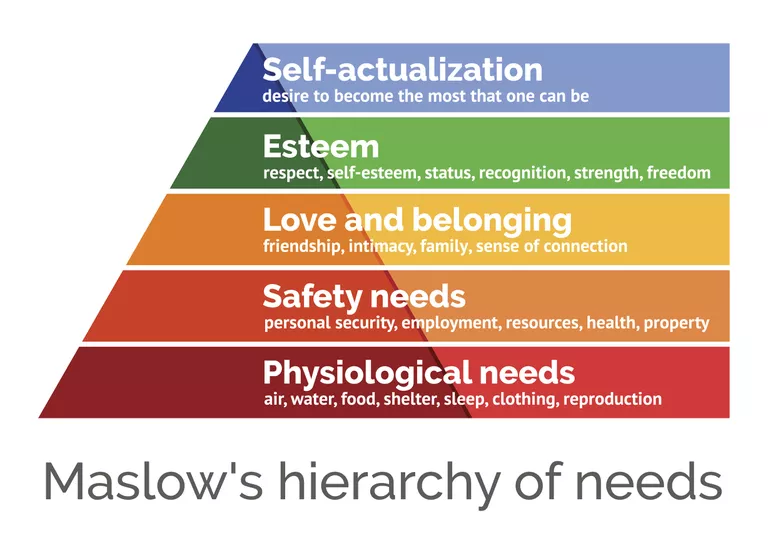
Many of the needs fulfilled by SEL also help maximize student learning. Consider Maslow’s Hierarchy of Needs. SEL targets the upper portions of this diagram by helping students attain “esteem” and “love and belonging.”
Further, students without adequate SEL development are also at risk for a variety of negative outcomes, including need for public assistance, substance abuse, emotional and behavioral issues, and criminal behavior and detention.
When SEL is implemented into the classroom with purpose and clarity, research shows a moderate reduction in infractions such as bullying, violence, cyberbullying, aggression, verbal abuse, and sexual harassment.
Beyond just decreasing negative outcomes, SEL has also been proven to increase social skills and reduce depression and anxiety among students.
These are just a few reasons why teachers are looking for new tools to bring SEL into their classrooms.
What tools are available to me to integrate SEL into my class?
We’ve compiled a list of tools that may be useful for teachers to help implement SEL into their classrooms. Check out some of our favorites below!
Panorama Ed — Provides information about how to construct your own SEL program, as well as a collection of 20+ tools for lesson-based, in-school, or after-school SEL.
AIR’s SEL Assessment — A free toolkit for teachers, policymakers, or administrators to assess the landscape of SEL in their environment. This tool provides a decision tree for selecting the best methods to implement.
Edutopia — A host of videos, articles, and media that assist teachers in learning best practices for SEL and offer implementation ideas.
Growth Mindset Prompts — Prompts to use in your classroom to get students to think and operate outside of their comfort zone.
Common Sense Education — Provides activities, ideas, articles, and videos for teachers to integrate SEL into their classrooms, separated by grade bands: K-5, 6-8, 9-12.
10 Team Building Games for a Friendlier Classroom — This resource contains descriptions and content for running games that promote cooperation, collaboration, and friendly communication in your classroom.
Michigan Cares — A comprehensive social emotional learning (SEL) program available to Michigan schools and districts at no cost.
Free online professional development — These free online PD courses cover a variety of topics within SEL. Many of these courses were created in partnership with the Michigan Department of Education and offer SCECHs for Michigan teachers.
Final Thoughts
It’s important to remember that while many programs and tools exist, SEL will never be a one-size-fits-all curriculum because every classroom is different. The goal is to address students' social and emotional needs by offering them opportunities to build the skills in which they are struggling.
Consider using some of the available resources listed in this article to assess where your students’ strengths and areas of growth lie. Couple this approach with your own observations of your students to get a better handle on what skills you need to work on as a class as well as at the individual level.
Once you’ve evaluated where your students currently are, you can weave in reminders to practice certain behaviors, implement discussions and activities that promote cooperation and collaboration, and encourage students to consider other viewpoints and empathize with one another.

Nikolas McGehee
Senior Research & Innovation Specialist
Dr. Nikolas McGehee has a passion for improving education through research and innovation. He has expertise in advanced research methodologies and analytics as well as STEM education practices, trends, and issues. He has two children, Jace and Ellie, and dreams of making large-scale changes in education so that they can learn and excel in a world where students achieve their dreams and goals through exceptional educational opportunities.
Related Posts

A simple template for SEL check-ins
Using this simple template, our online instructors have learned a lot more about what’s going on in their students' lives, both sorrows and joys. This information can help teachers better connect with students and figure out what might be getting in the way of learning.

Time for Teachers: Self-Assessment with Community Support as Individual Solutions
Educators often cite a lack of time as one of their most significant stressors. How can we help teachers find the balance necessary to feel satisfied in their jobs and meet their social and emotional needs? This third post in the Time for Teachers blog series will discuss the importance of a self-assessment in addressing individual problems and solutions teachers face. This is not to say the onus of addressing challenges should fall squarely on the shoulders of individual teachers. Teachers need a community of practice and support to help them identify problems they might face individually that could benefit from solutions that come from consulting with colleagues.

Time for Teachers: Agile Meetings and Short Pulse Surveys as Systemic Solutions
Educators often cite a lack of time as one of their most significant stressors. How can we help teachers find the balance necessary to feel satisfied in their jobs and meet their social and emotional needs? This second post in the Time for Teachers blog series will discuss two possible solutions that can help all educators save time while addressing needs to serve students and communities: agile meetings and short pulse surveys.

Do You Encourage Stigma?
It’s time to break through the stigma that comes with needing help to cope with mental and emotional challenges. Robust social-emotional...

How to Help Foster Self-Awareness in Students
Self-awareness is a skill that many adults, let alone kids, struggle with. Fortunately, however, this skill can be cultivated in youth...

Time for Teachers: Importance of Distinguishing Systemic from Individual Barriers and Solutions
Educators often cite a lack of time as one of their most significant stressors. How can we help teachers find the balance necessary to feel satisfied in their jobs and meet their social and emotional needs? This first post in the Time for Teachers blog series will distinguish systemic from individual barriers, which is essential to ensure that finding time for themselves is not an undue burden on individual teachers. Some challenges require state-, district-, and school-wide solutions.