
Mastery of the Universe

Being in California for iNACOL Symposium 2014 was an opportunity for me to learn about blended learning projects that lead the innovation curve. I ended up spending the lion's share of my sessions learning about competency-based education. It’s not the first that I’ve heard of the theory, but it’s the first time I really let myself deconstruct the concept to analyze the moving parts.
https://twitter.com/nacol/status/530401240656523264
If you’re not familiar with competency-based education, the U.S. Department of Education has a pretty good description to get you started.
Recognizing that every student builds toward learning targets in sequencing unique to them, is the basis of creating a personalized learning environment. The mastery component of competency-based programs really resonates with me because it means that teachers are building their lessons in ways that allow them to know how a student is performing.
It doesn’t make sense for students to progress to new content before demonstrating that they fully grasp the learning targets from prerequisite lessons, modules and units. Yet this is precisely what traditional classroom models do, marching students through the curriculum at a pace and path most convenient to the school calendar. As a pre-service teacher, I was told the only way to cope with the steady march was to teach to the middle. But we know that leaving students behind for the sake of common pacing just isn’t acceptable.
https://twitter.com/ericnentrup/status/530040354477993986
But can we really just throw out the common calendar?
Competency-based purists prescribe to personalized grade level progression. Once students are able to demonstrate competency they are able to advance to the next level. Teachers have a great deal of control to do this at the lesson level within a course, but grade level progression becomes problematic. Let’s face it, most traditional schools aren’t ready to make that drastic of a structural shift. But there is an opportunity for teachers to teach to mastery within a single course.
So here are my thoughts on what can be applied from a blended learning design standpoint:
- Data from formative assessments can inform learning path — In my experience, data-informed decision making gets a bad reputation among teachers. Administrators use summative test data as an element of teacher evaluations, so they are perceived by teachers as punitive instruments. Yet, it’s valuable to teaching and learning when data from formative assessments is used to address gaps in learning.
- Feedback loops are critical to creating personalized paths to mastery — Receiving performance information work allows teachers to guide students on personalized learning paths adaptively, manually or with a combination of both. Thinking of learning as a constant process of revision helps to address and fill learning gaps.
- Think thoughtfully about what kind of information will be most telling and how teachers might act on it — It’s essential to think about how learning target attainment will be recognized. Think canary in a coal mine. Are benchmark quizzes and rubrics designed in a way that they inform specific deficiencies? Taking it further, can we proactively identify resources or canned guidance that could be prescribed to students individually when those specific deficiencies are recognized? For deficiencies that are complex or unique, how can technology be used to provide timely, thoughtful feedback to right the ship? The capacity building power of collaborative technologies can be really helpful when these pinch-points are reached.
- Don’t let students quit. Do that by not quitting on them. — Traditional learning models teach students that giving up is acceptable when they get behind. They learn that this is acceptable, because we allow it. We’ve mistaken feedback for grades. As difficult as it is, delay giving students grades until mastery is attained.
Are you teaching to mastery/competencies? Have you established rich feedback loops with your students? How are you using student performance data formatively? Please share your stories with us!

Jeff Gerlach
Jeff is passionate about helping teachers enhance learning for students by way of strategic technology integration. This fuels his work as an instructional design coach. Prior to his time at Michigan Virtual, Jeff was a social studies teacher for six school years and he earned a master’s degree from Michigan State University in educational technology. Away from the education world he enjoys spending time at the ice rink, at home with his young family and head nodding to hip-hop music.
Related Posts
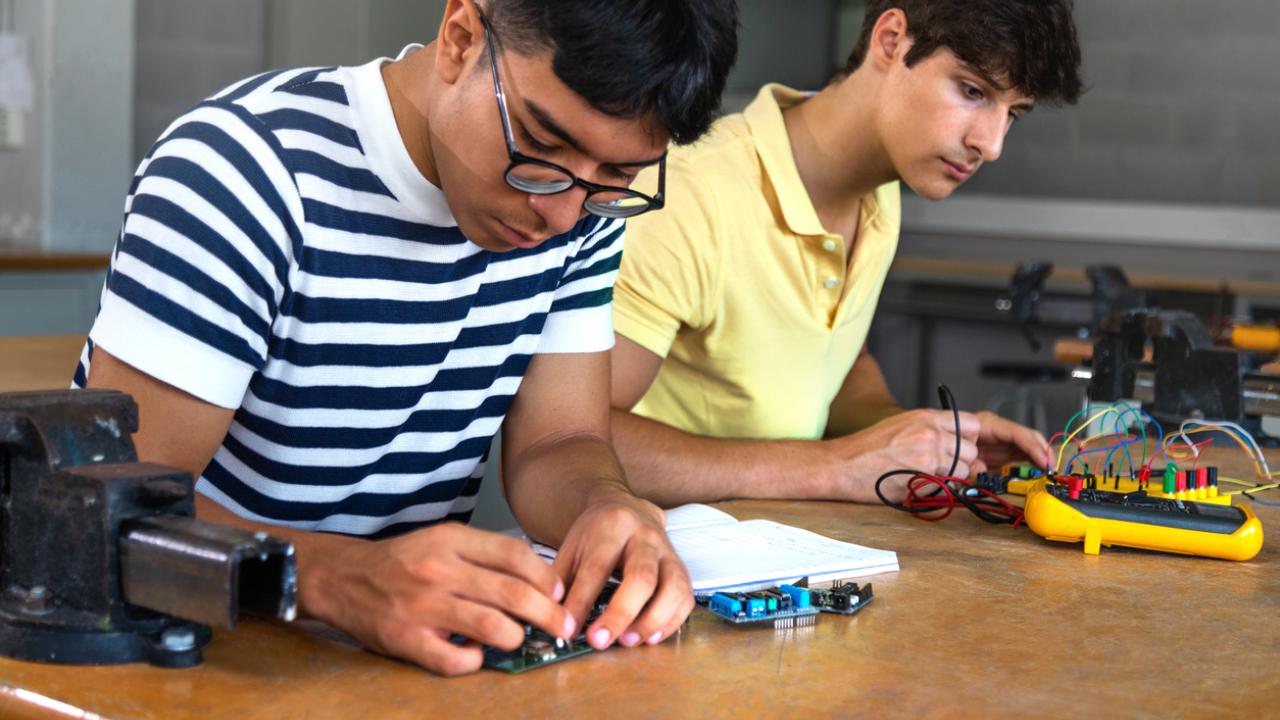
Project-Based Learning and Competency-Based Education Work Together at FlexTech: An Interview with an Educator
By blending project-based learning with competency-based education, FlexTech aims to provide a personalized path to graduation, meeting both academic standards and students’ personal growth goals.
It’s not about the tech, but how you use it: a mindset for blended learning
In my district, we continue to work on preparing our students for a changing world. Maintaining positive relationships is always...

Podcast: Student Agency and Google Classroom
Welcome to Digital Backpack! In our first Digital Backpack cast, we chat with Traci Smith, a high school English teacher at De La Salle....

Podcast: Engagement Hoopla
In this episode, Jeff and Erin chat with Emily Sicilia about engagement in the classroom. They explore how to define classroom engagement, and chat about Hoopla, an app Emily shares that has changed their reading lives!
The Blended Files — "As Seen on TV: Blended Learning's Greatest Achievements"
Welcome to The Blended Files, our super-secret project (shhhhhhh) where we visit the classrooms of Michigan teachers and share the strategic and thoughtful ways they’re incorporating technology into their lesson plans. In our first case, we explore Mrs. M's 7th-grade social studies classroom.

An Open Letter to "Sit and Get" PD
My old friend — When I first started teaching, it was always you holding my hand. You were there for my first conference. Since the beginning, you've set my expectations for what professional development should be like. This may be difficult to hear, but it's time for our relationship to end.