
CASE STUDY
Changing the Narrative with Michigan Cares & Levey Middle School
As one of the first schools to utilize Michigan Cares, Levey Middle School has found that by changing the narrative on how to support youth, their students now have an opportunity to learn from their mistakes. Prior to implementing the modules in their classrooms, Levey’s options for responding to students’ missteps were very similar to most schools: suspensions, detentions, or sending them home. But with Michigan Cares, the use of those tools has drastically declined and at times, not been needed at all.
By giving students guidance about how to treat their peers, reflect on their actions, or navigate the world around them, Levey has received nothing but positive feedback from students and improvements in their behaviors. With the program students are learning to understand how to manage their emotions, set goals, achieve them, and make responsible decisions.
“In my 25 years of working in Detroit schools, I’ve seen my share of school programs that are designed support students as they navigate through life alongside their academic endeavor,” says Joel Blankenship, Levey’s coordinator of culture diversity and inclusion. “I can confidently say that the resources today have come a long way – Michigan Cares has really helped Levey students become the best that they can be.”
How Levey Middle School Implemented Michigan Cares
By focusing on students’ social and emotional development, Levey has created an intersection of knowledge and how to apply it to the students’ own worlds using Michigan Cares character development lessons. Levey encourages teachers to use the program during first period, and assign modules based on student need. Then, if a student lands in detention, Levey uses a layered approach with Suite 360-intervention and restorative practices modules, and guidance from Mr. Blankenship, to help students understand how to better manage their emotions and behaviors.
In the beginning of the 2022-2023 academic year, Levey had 25 school suspensions. These were due to tardiness, dress code violations, cell phone usage, along with other small infractions. However, that number began to decrease from twenty-five to seven, from seven to two, and from two to zero.
Rather than punishing students by suspending them and preventing them from being in an academic learning environment, Levey’s school leaders helped to change the narrative that the school had. The faculty, utilizing Michigan Cares, helped to increase engagement inside of the classroom while removing barriers to students’ academic learning.
“Life is life, and kids will still make mistakes, but our hope is that they just won’t make as many,” added Blankenship.
Implementing Michigan Cares in Your School
From learning how to set and achieve goals to making responsible decisions, Michigan Cares guides students to turn struggles into strategies. When asked what would help students, educators often note the need for life skills like making responsible decisions in the classroom, feeling and showing empathy for others, and developing healthy coping techniques. These are just a handful of real-life concerns that Michigan Cares addresses in 1,300+ lessons.
Michigan Cares consists of social-emotional learning modules for students, staff, and parents, and is available at no cost to all Michigan schools and districts. Additional restorative practices programming is also available in customized bundles.
Get started with Michigan Cares in your own school today at www.michiganvirtual.org/michigancares.
#2 — Highly-qualified instructors, not just content presenters
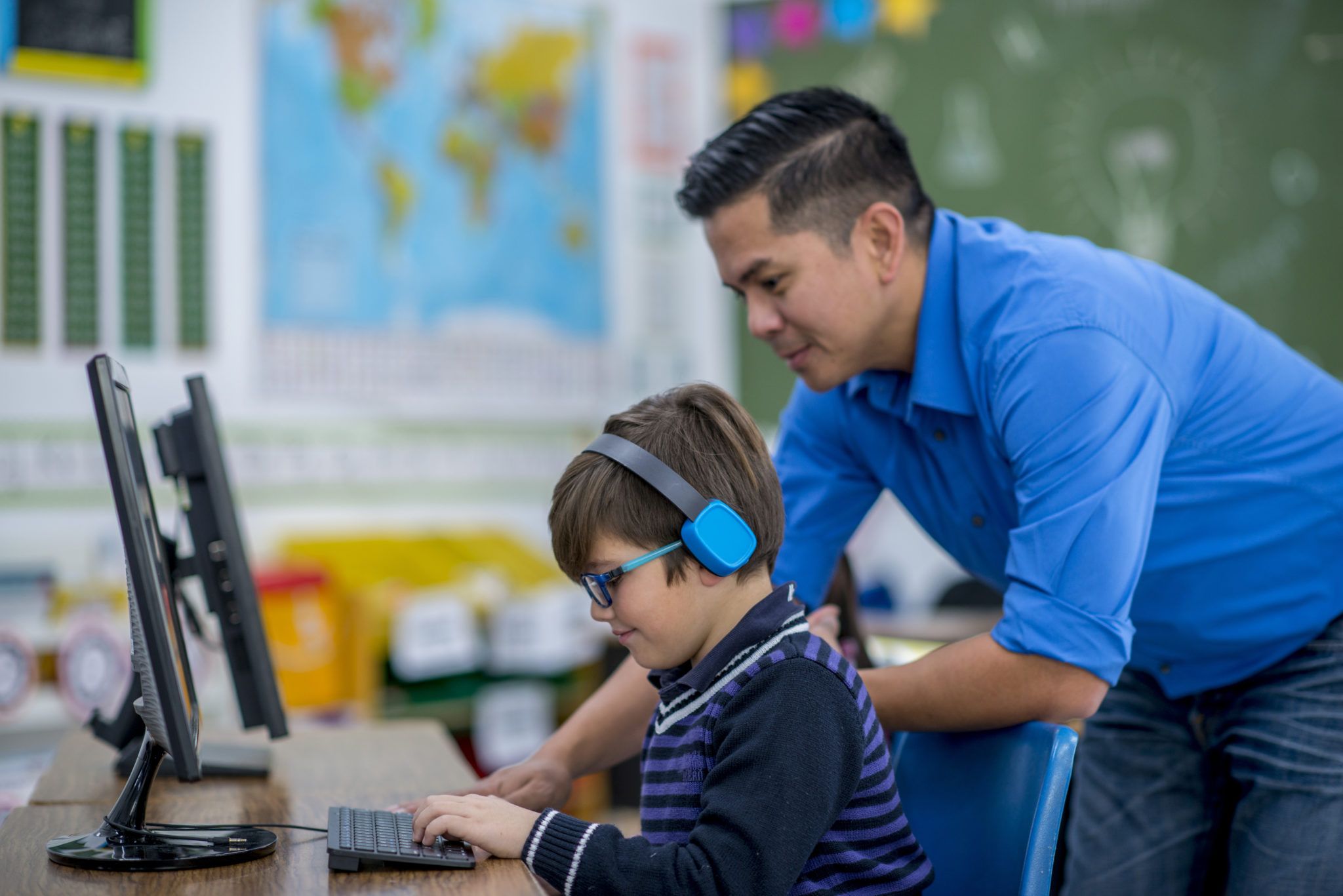
Many online course providers offer students a) no teacher at all, or b) a “teacher” who simply presents content, but does not offer students personalized feedback on their assignments. Here at Michigan Virtual, we want our students to thrive in their online courses, so we put significant effort into hiring highly-qualified, Michigan-certified teachers and training them in best practices for online instruction.
#3 — Trained mentors who track student progress and guide success
In the State of Michigan, schools are required to provide an on-site mentor for every student who chooses to take an online course. Why? Because mentors provide critical support to online learners. By developing a face-to-face connection, keeping students on schedule, and providing guidance and support, mentors make online courses less overwhelming and more manageable for students.
The problem many mentors face, however, is that they do not receive adequate training on how to support their students. That’s why we offer all of our mentors a myriad of free training opportunities in best practices for mentoring online students. When mentors are prepared for their job responsibilities, they better serve online learners and facilitate greater student outcomes.

#5 — Award-winning & accredited course content
Part of our success lies in the use of a third party to evaluate our courses to ensure they meet Michigan’s merit requirements. As a member of Quality Matters — a nonprofit organization and recognized leader in quality assurance for online learning — we have access to:
- Excellent course peer review processes
- Professional development opportunities, and
- Standardized rubrics to evaluate and improve the courses we offer to students.
In 2017, we received the Quality Matters Make a Difference for Students Award for Outstanding Impact by a K-12 Organization.
In 2005, we were accredited by AdvancED, a non-profit, non-partisan organization that conducts rigorous, on-site reviews of a variety of educational institutions and systems to ensure that all learners are receiving a quality education. We were subsequently re-accredited in 2010 and 2016.