
Micro-credentialing & the dawn of competency-based professional development

When it comes to our students, we strive to foster growth mindsets and implement competency-based learning in our classrooms.
But when it comes to our own professional development, we so often accept “sit and get” learning sessions that rely on outdated pedagogical practices.
As experts in learning, we know that “sit and get” models are not the best ways for either adults or students to learn. So why is it that we hold ourselves and our peers to a different standard when it comes to educator training and professional development?
We believe that we can do better, and that, by working together, we can motivate a paradigm shift toward competency-based professional development in the state of Michigan.
With the advent of micro-credentialing — a digital badging system that offers an alternative to the SCECH model — we believe that the dawn of competency-based professional learning has finally arrived.
What is competency-based PD and why do we need it?
Competency-based professional development is exactly what it sounds like:
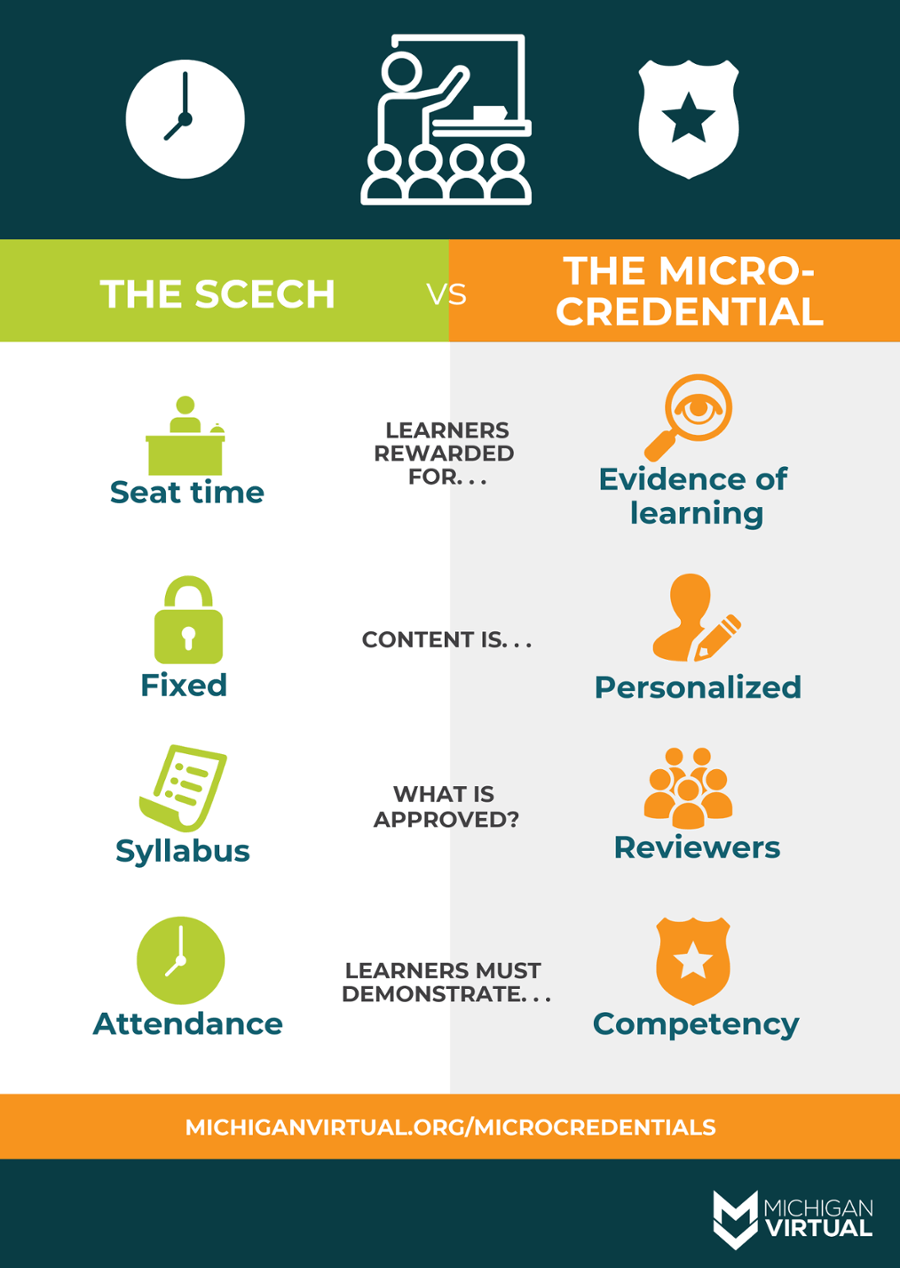
It is a model for professional development that rewards learners for providing evidence of competency in a particular skill, rather than rewarding participants for their attendance at a particular session.
Under this model, educators are evaluated based on their ability to do the work, rather than being evaluated based on mere exposure to a particular concept.
This approach to PD is personalized to the unique needs of the learner. Wherever you are in your understanding of a particular topic, a competency-based course should encourage you to pick up where you left off and move toward mastery and the practical application of skills.
If you chose to take a competency-based PD course on using wait time in the classroom, for example, rather than sitting through a “sit and get” lecture on effective wait time practices, you would be provided with relevant resources and then asked to demonstrate evidence of your efforts to incorporate this skill into your classroom.
What are micro-credentials?
Micro-credentials are a relatively new concept in education. They are a form of certification — typically symbolically represented as a digital badge — that operate as a stamp of approval for mastery of a particular skill.
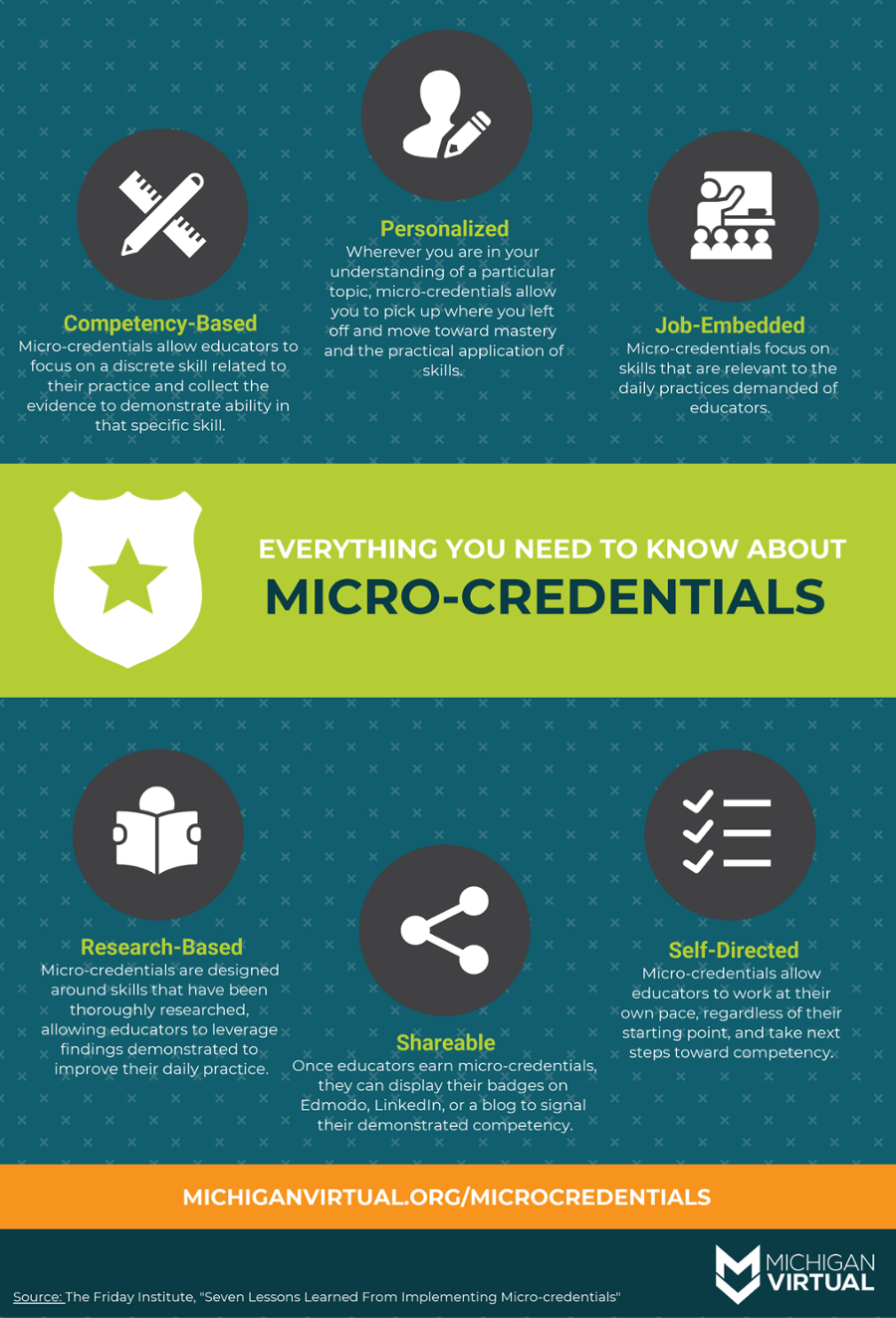
Micro-credentials follow the paradigm of competency-based professional learning by allowing educators to focus on a discrete skill related to their practice — for instance, checking for student understanding — and collect the evidence — such as classroom videos or student work — to demonstrate ability in that specific skill.
For example, the first micro-credential course we released, in partnership with MASA, focuses on the skills district administrators need in order to craft effective and legally sound communication plans. This course was developed in order to meet a pressing need from administrators — the need to develop the practical skills necessary to support and defend their districts from legal issues.
Following a competency-based model of professional development, if you are already competent and actively using a particular skill, you can demonstrate competency without spending hours sifting through lessons already learned.
Just as SCECHs operate as Michigan’s reward system for honoring teachers for the time they spend on their professional development, micro-credentials operate as a reward system for honoring educators for the competencies they have mastered.
Another benefit of these digital badges is that they are shareable, meaning that once educators earn micro-credentials, they can display their badges on Edmodo, LinkedIn, or a blog to signal their demonstrated competency.
There’s something deeply ingrained in the human psyche, it seems, that supports the use of a badging system to reward progress.
“No educator understands the idea of badging,” said Mary Sutton, executive director of the Michigan After-School Partnership (MASP), “until they themselves get a badge for something.”
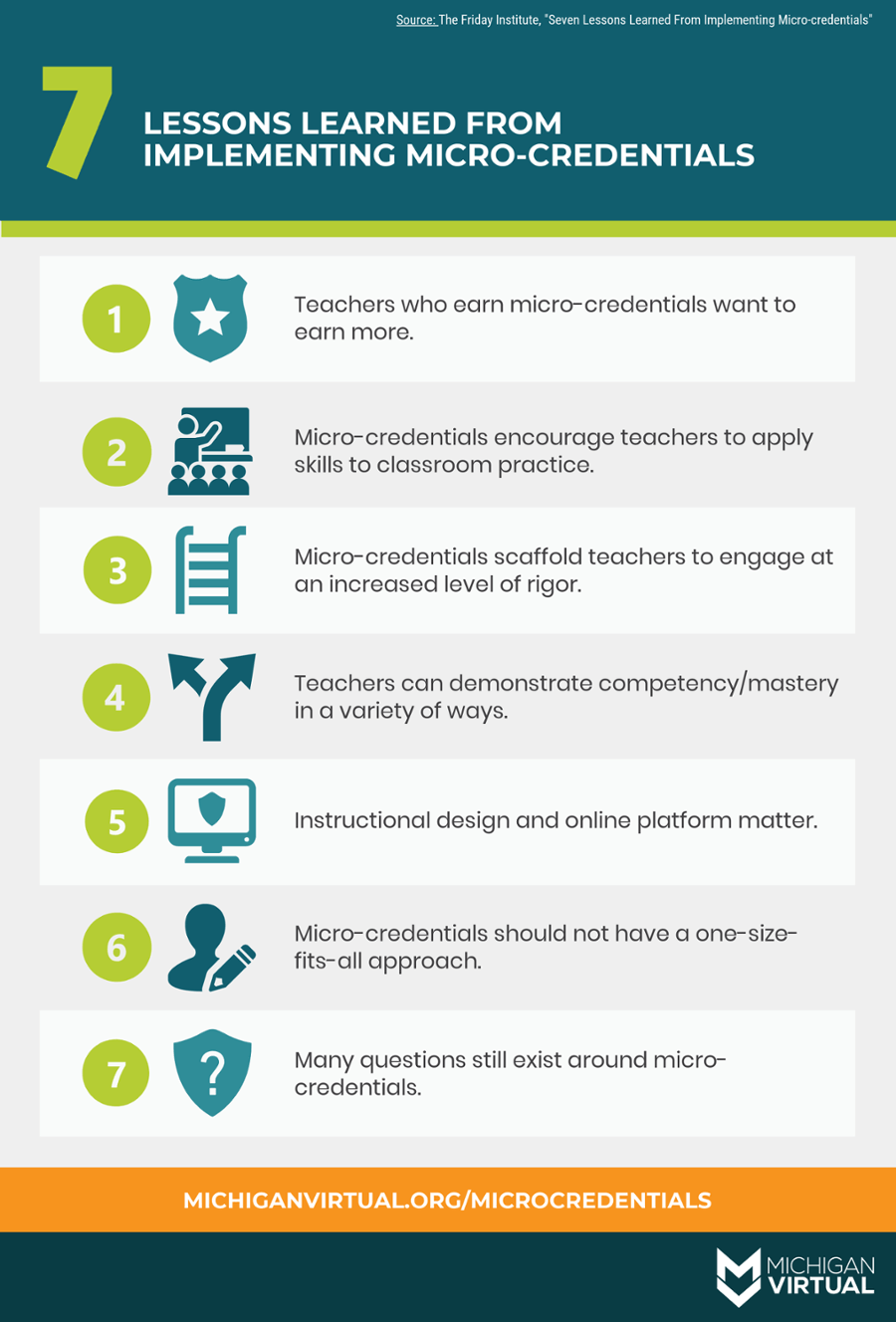
According to the Friday Institute for Educational Innovation, 97 percent of respondents to a post-course survey for one of their micro-credential courses indicated interest in pursuing another micro-credential in the future.
What do we need to move forward?
Embracing competency-based professional development means embracing a culture of continuous improvement.
It is a culture shift that requires all of us in the field of education, in the words of Brené Brown, to embrace our own vulnerability by being open to and aware of both our strengths and areas for growth.
In an era where educators are stressed, exhausted, and not receiving nearly enough respect as a professional body, taking the extra effort to make this culture shift may feel like a big ask.
But just because something is difficult doesn't mean it’s not worth doing.
What we need is for our educational leaders to pave the path forward by developing systems that reward competency-based professional development and make it both a manageable and safe process for busy educators.
We need to set reasonable expectations; reward honesty, vulnerability, and effort; and help educators understand how valuable a growth mindset and competency-based PD will be to their classrooms and their students.
We need to offer our educators professional learning experiences that are worthy of their time and efforts by providing them with competencies that directly apply to their classroom practices, and, therefore, directly improve student outcomes.
These have been our goals as we worked with other educational organizations in Michigan to develop a system for awarding teachers with micro-credentials.

Earn your first micro-credential today! Micro-credentials may just be the future of professional learning in K-12 education. Why? Wherever you are in your understanding of a particular topic, micro-credentialing allows you to move toward concept mastery and the practical application of skills. In partnership with MASA and MEMSPA, we have begun offering micro-credential courses for Michigan educators.
Ken Dirkin
Coming Soon
Related Posts

Evaluating and Maximizing Professional Learning: An Interview with a Researcher
This blog digs into the key findings from two MVLRI research studies exploring educator engagement with professional learning (PL), their beliefs about implementing what they’ve learned, and insights into continuing to tailor PL to meet educators’ needs.

Creating a Culture of Continuous, Collaborative, and Personalized Professional Learning
Not only is the professional learning happening within Michigan's Grand Ledge Public Schools continuous and collaborative, it is also rooted in their strategic plan, reflective of their beliefs about student learning, and personalized to fit the unique needs of each staff member.

A Framework for Empathy: 3 steps leaders can follow to center educators’ Needs and Wants
Part 1 of this blog series digs into the results of a survey on what educators need and want from their professional learning experiences. Here in Part 2, we show you the framework we used to create and conduct the survey as well as provide you with ideas for implementing this framework in your own context. Special thanks to my colleague, Danielle Peck, who contributed significantly to this study and the writing of these blogs.

Street Data and Empathy: Revealing What Educators Truly Want from Professional Learning

Effective Practices in Professional Learning Course Design: Course Content
Based on direct input from learners via end-of-course survey data, Michigan Virtual’s Instructional Product Development team gleaned the effective practices outlined in this blog in order to improve their course development and better meet the needs of the educators whom they serve.

Effective Practices in Professional Learning Course Design: Assessments, Format, Structure, and Appearance
Based on direct input from learners via end-of-course survey data, Michigan Virtual’s Instructional Product Development team gleaned the effective practices outlined in this blog in order to improve their course development and better meet the needs of the educators whom they serve.