

From Curiosity to Career: Exploring Possibilities with VR

Guiding students to discover their passion and contribute their unique skills to a future career is no easy task. Even when students are engaged with the curriculum, providing opportunities to experience real-world job responsibilities isn’t always possible. To help address this challenge, Michigan Virtual partnered with Transfr to provide an immersive Virtual Reality (VR) pilot to five districts across the state.
Why consider virtual reality?
Virtual Reality isn’t exactly new, but it’s certainly having a moment in education. With declining costs, improved equipment, and a rapidly expanding library of educational content, more educators are exploring the potential impact VR could have in their classrooms. What makes VR so exciting is its ability to let students experience a situation. For hands-on learners in particular, this kind of immersive interaction can truly help the content stick. It feels meaningful, memorable, can lead to more complex thinking and reflection, and is, indeed, far more engaging than a worksheet.
Another great reason to explore VR in education is its increasing relevance beyond the classroom. As more industries adopt this technology, companies are turning to VR to train employees through realistic simulations, allowing them to build skills and receive feedback in a safe, controlled environment. These experiences help new employees gain confidence when starting a new career.
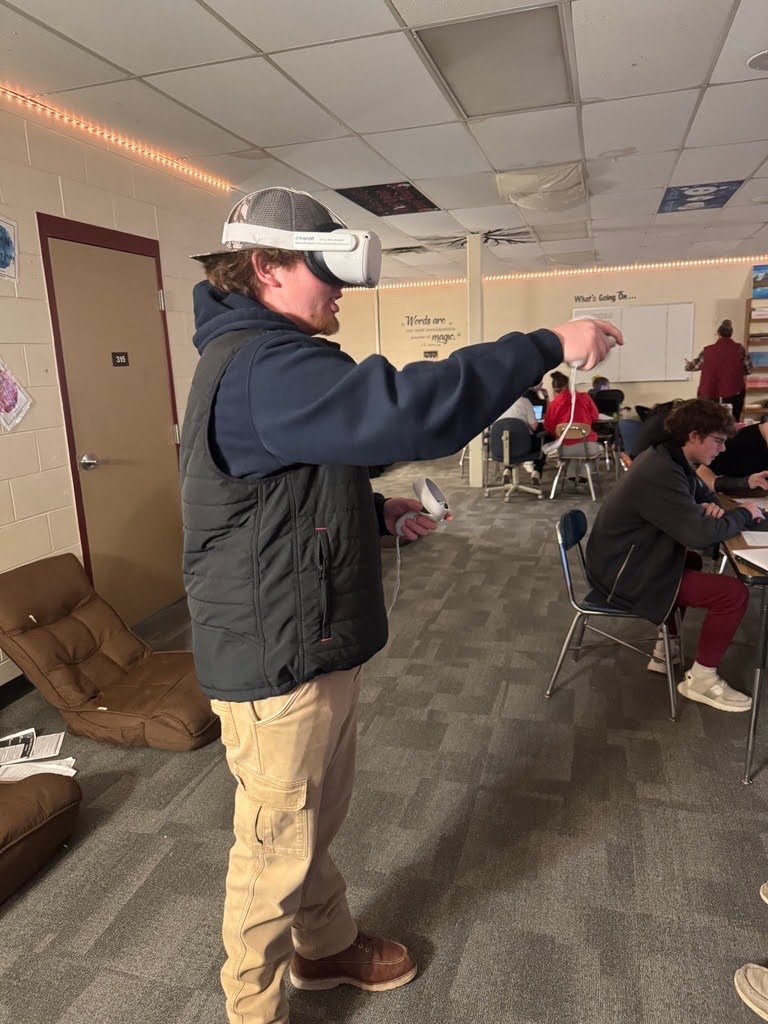
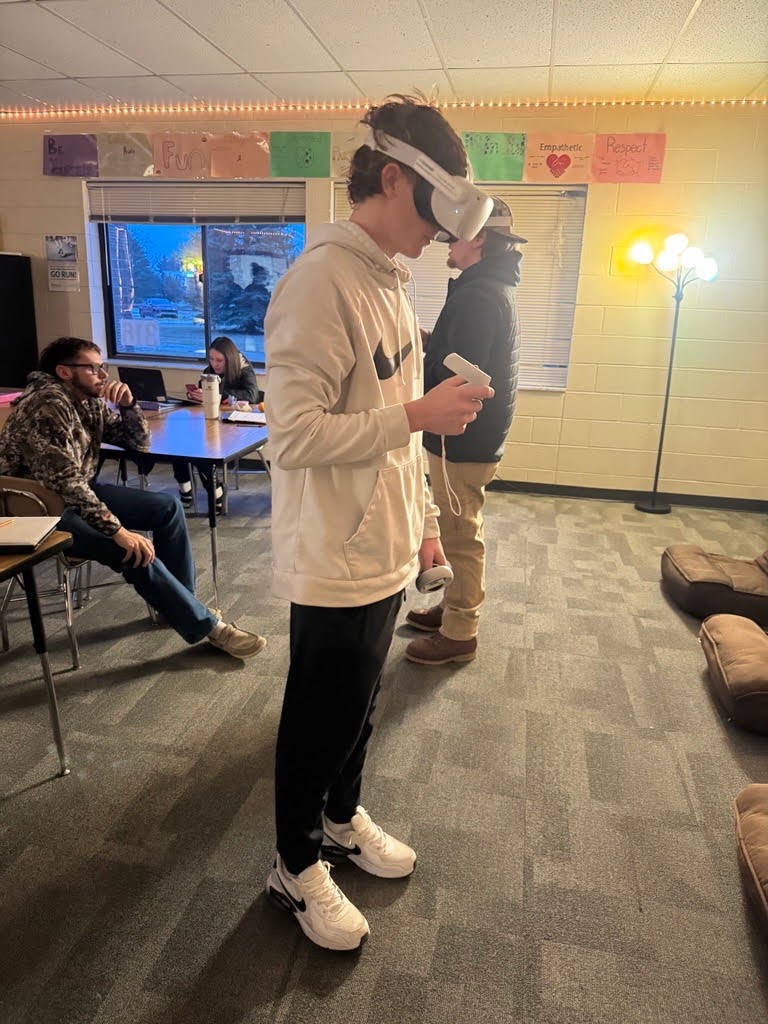
PC: Pilot participants from Portland High School
Pilot design and findings
Once we confirmed strong industry interest in VR, Michigan Virtual set out to find the right fit for a program to pilot. We ultimately selected Transfr’s career exploration bundle because it offered a wide variety of simulations tailored to students across multiple age groups. A total of 5 Michigan K-12 school districts participated, providing over 600 students in grades 8 through 12 with the opportunity to access VR simulations within their own classrooms.
Each simulation highlighted a common skill required in a selected field that could be completed in around six minutes, and concluded with an option for students to rate their experience. Some examples of simulations that students were able to experience were creating a signature dish as a chef and restoring power to an entire town as a transmission line worker. For students who were interested in taking their VR experience to the next level, Transfr’s career exploration portal offered additional opportunities for students to dive deeper into interested career paths.
Pre-pilot survey results showed that while most participants felt somewhat uncomfortable with the technology—or didn’t currently have access to it in their districts—they still recognized real potential in VR. Many believed it could help guide students toward future workforce expectations and responsibilities, while also supporting more effective instruction by enabling learning experiences that wouldn’t otherwise be possible.
Post-pilot results indicated that, although using VR technology was a bit out of their comfort zone and had a learning curve, the majority viewed it as extremely useful for teaching career readiness. They also saw it as a highly effective tool for preparing students for future workforce demands. Student feedback revealed that their favorite simulations included assisting with a knee surgery as a surgical technologist and responding to a car crash as an EMT. Perhaps we will have an abundance of healthcare enthusiasts in our future!
What comes next?
We all know that technology is constantly evolving, and there is no doubt that VR will continue to benefit from these advancements. While this pilot was focused on a specific content area, many VR solutions offer a breadth of in-depth simulations that can lead to industry-recognized credentials, as well as a wide range of other educational content.
What do you think? Are you ready to go beyond the textbook and into the world of VR?
To explore opportunities for participation or to learn more about what Michigan Virtual’s Research and Development team is interested in piloting, visit our website.

Melissa Graeser
Research and Innovation Manager
Melissa has worked for Michigan Virtual since February 2018. After graduating from Michigan State University in 2013, she has worked professionally as a clinical laboratory specialist, and she still lurks the halls of a hospital on an occasional weekend. Melissa lives with her husband and young children and is loving the life of being a wife and mom. She enjoys catching a good movie, camping and being outside.
Related Posts
What ASU+GSV 2026 Revealed About the Future of AI in Education
What emerged from ASU+GSV 2026 was clear: AI is no longer an emerging trend in education. Michigan Virtual reflects on the conversations shaping the future of teaching, learning, workforce readiness, and student agency in an increasingly AI-driven world.

Understanding How Students and Teachers Think About Responsible AI Use: An Interview with a Researcher
Students and teachers generally understand the risks of AI misuse, but they are less clear about what responsible AI-supported learning should look like in practice. This interview highlights findings from a Michigan Virtual study showing that students need clearer examples, consistent expectations, and practical guidance for using AI transparently and appropriately in schoolwork.
What Happens to Students' Online Course Scores After the Course Ends?
The moment an online course ends, a new question begins: how will that score be recorded locally? Drawing on a 2025 brief and a small follow-up survey, this blog post outlines three common approaches districts use to interpret and record students’ online course scores and why the differences can matter for students.
Have You Considered AI in Your Classroom? A Khanmigo Pilot Story
In a two-phase pilot across Michigan schools, educators used Khanmigo, an AI-powered tutor and teaching assistant, to explore how AI might support teaching and learning. Their reflections surfaced both opportunities and challenges. The big takeaway? AI has potential, but only with intentional support.

Out of Order, Still Out of Reach: Variations in Pacing among World Language Students
Cuccolo & Green’s (2025) report highlighted the relationship between students’ assignment submission patterns and final course scores. Given that pacing has important implications for student performance, knowing what assignment submission patterns look like across schools with varying demographics could help prompt early identification and intervention. As such, this blog explores students’ assignment submission patterns based on school-level demographic information.

Out of Order, Still Out of Reach: An Interview with a Researcher
In this blog, MVLRI researchers synthesize the key findings from two research studies about student assignment submission patterns in Michigan Virtual online courses.