
Introduction
Artificial Intelligence (AI) continues to rise as one of the most transformative forces of our time. In education, AI’s potential to enhance efficiency, personalize learning, and reimagine teaching practices has only become more apparent over the past year. The technology’s rapid evolution and expanding availability mean that Michigan educators are encountering AI tools more frequently, both inside and outside of classrooms.
As with any emerging technology, however, AI adoption in education requires careful planning and alignment with local values and goals. Questions about equity, transparency, data privacy, and professional capacity remain central to successful implementation. Moreover, the pace of development makes ongoing research essential to ensure that the use of AI in schools is both effective and responsible.
Recognizing these needs, the AI Lab at Michigan Virtual has partnered with leading education associations across Michigan through the AI Statewide Workgroup. Together, these organizations continue to examine how AI is being used, how educators feel about it, and what supports are needed to move forward responsibly. By conducting annual surveys with educators across the state, the Workgroup is building a foundation of knowledge to guide districts as they navigate this complex and fast-changing landscape.
This 2025 report serves as a new snapshot of the state of AI in Michigan education, offering insights into both continuity and change since the initial 2024 survey. Many themes surrounding trust, professional learning, and ethics have stayed consistent, but one notable change is that usage growth appears to be outpacing feelings of trust. This dynamic presents both opportunities and challenges for schools, making it more important than ever for district and state leaders to stay engaged, informed, and proactive in their approach to AI.
What Exactly is AI?
Throughout this report, we use the term artificial intelligence (AI), but what exactly do we mean by that? For consistency and comparability, we continue to rely on the same operational definition used in the 2024 report, drawn from Michigan Virtual’s Planning Guide for AI: A Framework for School Districts:
In this report, the term “AI” is used broadly to refer to both:
Artificial Intelligence (AI): A branch of computer science that involves the development of intelligent systems capable of performing tasks that typically require human intelligence. AI enables machines to learn from experience, adapt to new data, and make decisions based on patterns and algorithms.
Generative AI: This type of AI encompasses algorithms and models designed to produce new content—be it text, images, or video—by learning from vast amounts of existing data.
While the definition remains the same, what has changed since 2024 is the speed at which educators are encountering these technologies. Generative AI in particular has become more visible in both public and professional settings, underscoring the importance of shared understanding around terminology. By continuing to ground our discussion in a common definition, we aim to support clarity, consistency, and meaningful dialogue among educators and leaders across Michigan.
Current Research Study
Like the previous year's study, this research was developed based on conversations with and input from the AI Statewide Workgroup. The following research questions guided the current study:
Are educators using AI in their professional roles, and if so, how?
Do educators trust AI systems? What are their primary concerns about AI?
How do educators envision the future of AI?
To answer these research questions, the AI Statewide Workgroup again distributed a survey designed to assess educators’ experiences, challenges, and perceptions of AI in Michigan schools. The 2025 survey mirrored the instrument used in 2024 to ensure consistency and comparability over time. It included demographic questions regarding educators’ roles, ages/levels served, and educational environments; questions assessing trust in AI and AI use; and questions about AI implementation in schools, including potential applications and concerns.
As in the prior year, the survey consisted of a core set of questions answered by all respondents, along with role-specific items tailored to participants’ professional positions. Role-specific questions were developed for the following groups: teachers, building principals/assistant principals (referred to as building administrators), superintendents/assistant superintendents, school board members, curriculum directors, and technology directors (collectively referred to as district administrators). The wording of these questions was adjusted to reflect each role’s context—for example, “Are you using AI in your classroom/building/district?”—while maintaining alignment across groups to allow for meaningful comparison.
The survey was shared with and distributed by the AI Statewide Workgroup to their membership, generating 554 unique responses as of July 21, 2025, in approximately 4 weeks. Responses with no recorded answers were deleted from the dataset. Please note that many tables will not add to 554, as respondents were given specific questions based on their role and were not required to answer questions. Additionally, some tables may add to more than 554 as respondents could select more than one option. Survey responses were collected in Qualtrics and analyzed in Excel. ChatGPT was used to assist in analyzing and summarizing open-ended question responses.
Findings
Educator Demographics
Table 1 below details the 757 professional education association memberships representing 526 participating educators (not every individual answered every question). Five professional organizations contributed over 50 participant responses each within the survey, and an additional 6 organizations had 20 or more participant responses, representing a diverse range of educator perspectives.
Table 1. Distribution of Professional Education Association Membership
Professional Education Association | 2025 Percent | 2024 Percent |
|---|---|---|
26.8 | 22.3 | |
13.5 | 13.0 | |
11.6 | 9.9 | |
Other | 11.1 | 2.1 |
7.1 | 6.8 | |
5.3 | 7.7 | |
MASA (Michigan Association of Superintendents and Administrators) | 4.0 | 6.8 |
REMC Association of Michigan (Regional Educational Media Center Association of Michigan) | 3.8 | 12.0 |
3.6 | 1.2 | |
MEMPSA (Michigan Elementary & Middle School Principals Association) | 3.3 | 3.7 |
MAISA (Michigan Association of Intermediate School Administrators) | 2.6 | 3.0 |
MI-ASCD (Michigan Association for Supervision and Curriculum Development) | 2.5 | 1.5 |
MAASE (Michigan Association of Administrators of Special Education) | 1.5 | N/A |
1.5 | 1.4 | |
1.3 | 7.3 | |
0.4 | 1.5 | |
0.1 | N/A |
As part of the demographic questions, educators were asked about their primary role. Table 2 below provides details of their responses. For the second year, building-level roles (69.3% of total responses), specifically teachers, represented the largest group of educators, followed by building principals/assistant principals, collectively providing valuable insight into how AI is being used in classrooms and with students. Additionally, 18.5% of the total responses came from district-level leadership roles (99 respondents), further providing diverse perspectives on district-level AI perceptions, needs, and concerns. While there was some variation in respondents by role from 2024 to the current year, overall trends remain similar, suggesting that the total composition of the sample professional roles is comparable.
Table 2. Distribution of Primary Educational Roles
Primary Educational Role | 2025 Percent | 2024 Percent |
|---|---|---|
District Level | ||
Superintendent / Asst. Superintendent | 5.2 | 4.3 |
School Board Member | 4.3 | 6.8 |
Curriculum Director | 3.7 | 1.4 |
School Business Official / CFO | 3.2 | 3.9 |
Technology Director | 1.7 | 3.5 |
Human Resources | 0.4 | 0.3 |
Building Level | ||
Teacher | 43.2 | 40.0 |
Building Principal / Asst. Principal | 15.0 | 15.3 |
Coach / Consultant | 6.7 | 6.6 |
Special Education Provider | 1.7 | 3.2 |
School Support Staff | 1.5 | 1.7 |
Library / Media Specialist | 0.6 | 2.8 |
Educational Support Professional | 0.6 | 0.8 |
K-12 Peripheral Supports | ||
Other (Please specify) | 8.0 | 6.3 |
ISD Administrator | 3.0 | 1.1 |
College Faculty | 0.7 | 1.8 |
Higher Ed Support Professional | 0.6 | 0.2 |
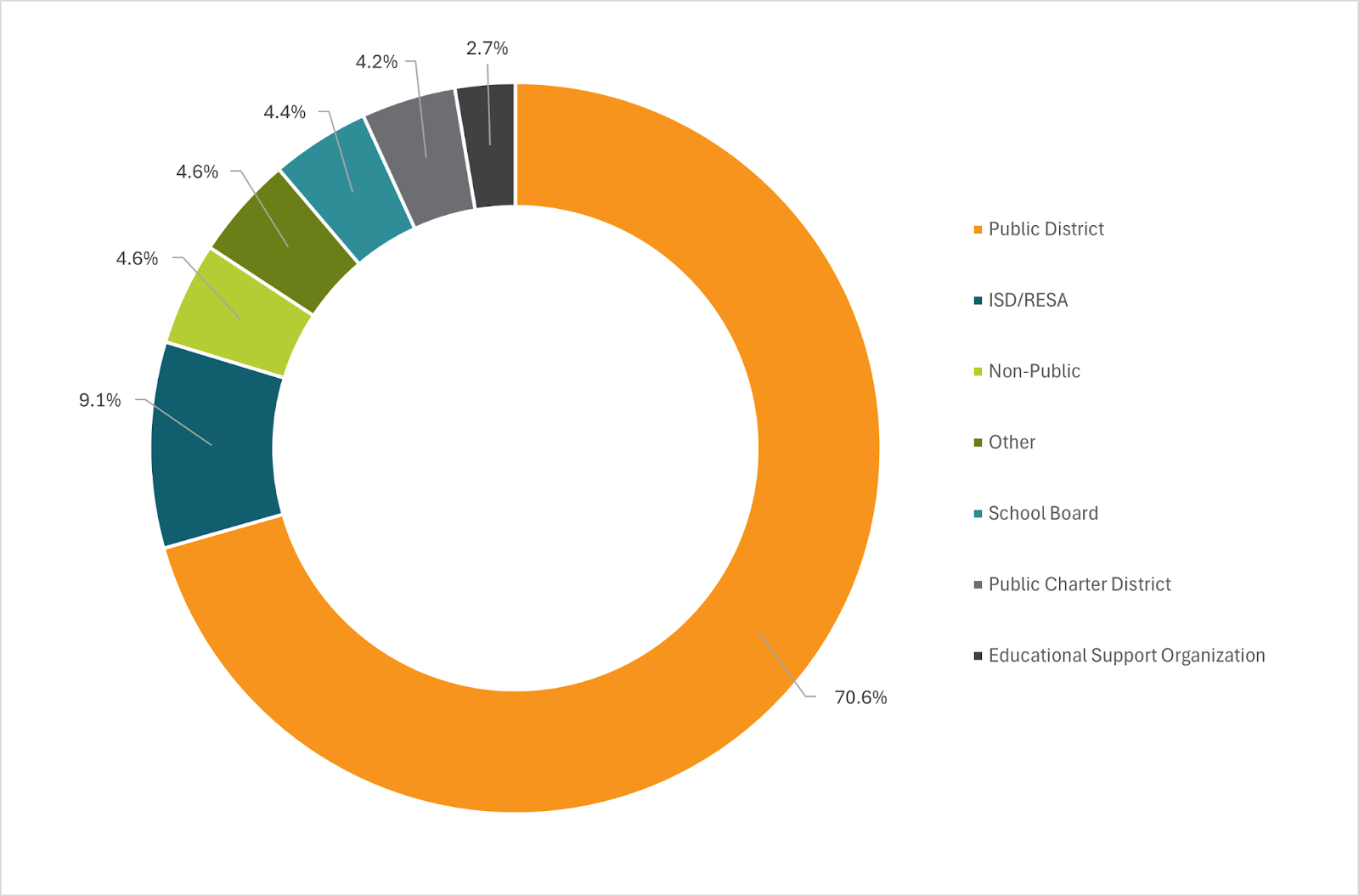
Educators were also asked to identify their primary educational environment. As detailed in Figure 1 below, well over half of responding educators were from public districts, continuing this trend from the previous year. While some variation existed in this year’s survey regarding respondents’ primary education environment, it was less than in the previous year's survey.
Figure 1. Primary Educational Environment
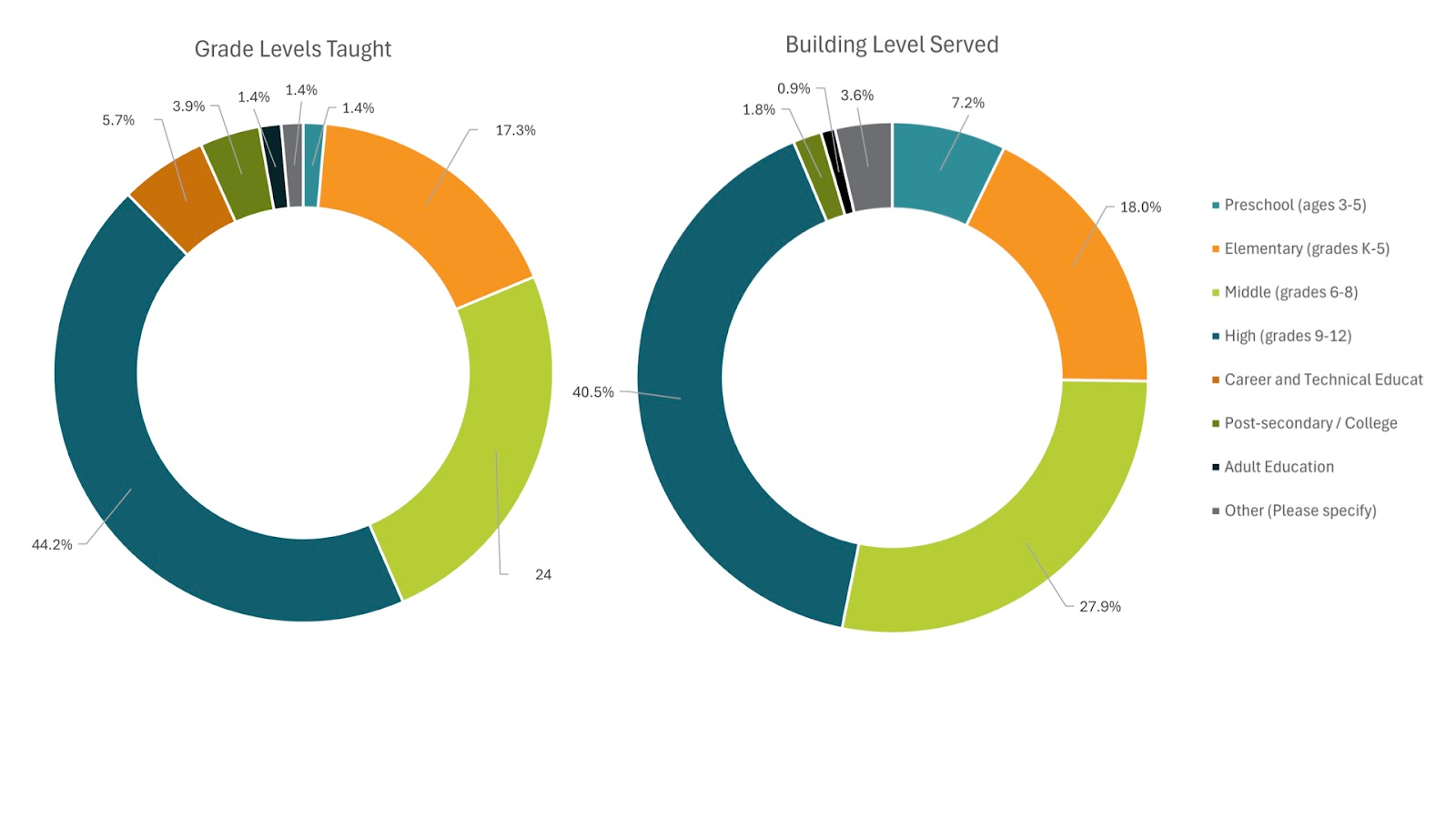
Educators who indicated they were teachers or building principals/assistant principals were asked to identify the grade levels they currently taught or the building levels they currently served. Figure 2 below details these responses. Similar to the 2024 survey, elementary, middle, and high school teachers were well represented, with a smaller number of respondents in adult education, post-secondary/college, preschool, and career and technical education.
Figure 2. Grade Levels Taught and Building Level Served
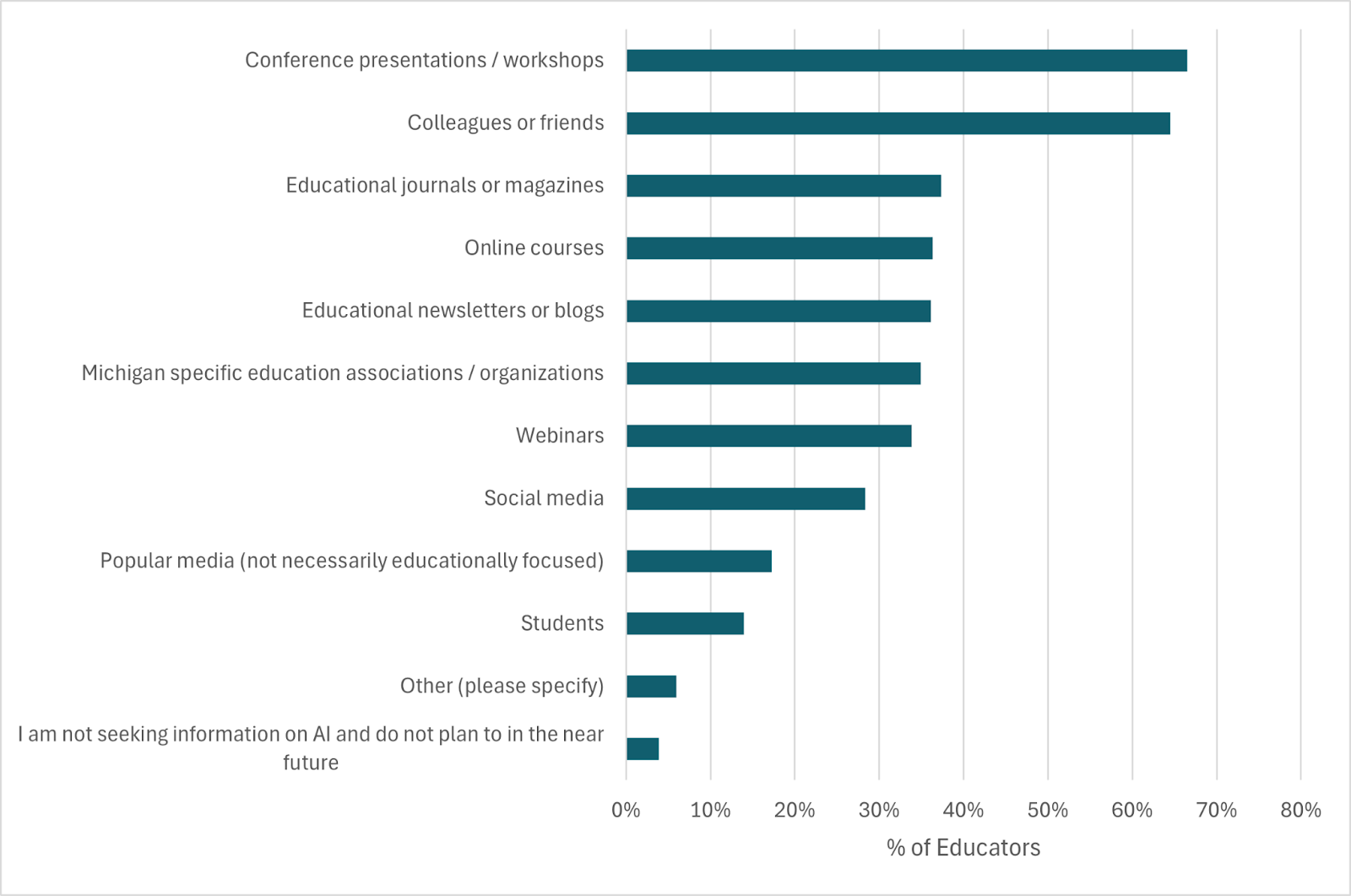
Additionally, educators were asked, Where would you turn (or have you turned) for information on artificial intelligence (AI)? Figure 3 below provides a summary of their responses. Among the most popular places educators turned to for information on AI were their colleagues or friends and conference presentations/workshops, with over half of educators indicating that they used either or both. This finding is aligned with the previous year's survey, as well as previous research that found educators preferred informal peer mentoring as well as options such as conferences, webinars, and online courses. In line with last year’s results, far fewer educators reported using sources like popular media or students for information on AI.
Figure 3. Sources of Information on AI
Are Educators Using AI in Their Professional Roles, and if So, How?
Educators were asked if they (teachers) were using AI in their classroom, or if teachers were using AI in their school (building administrators and district administrators). The responses, detailed in Figure 4 below, indicate that building administrators report that AI is being used in schools and classrooms to a larger extent than both teachers and district administrators. This is similar to the trend from the 2024 survey, with some notable differences. The percentage of teachers and district administrators who reported using AI in their classrooms or schools nearly doubled from 2024 to 2025, with 43.9% of teachers this year indicating that they were using AI in their classrooms. There was also an increase in building administrators reporting that AI was being used in their schools (over 80% indicating it was), although to a lesser extent. Given the trends from 2024 to 2025, it seems that over the last year, many teachers and district administrators went from being potentially curious about AI to actually using it in their classrooms and within their districts.
Figure 4. AI Use by Role Type
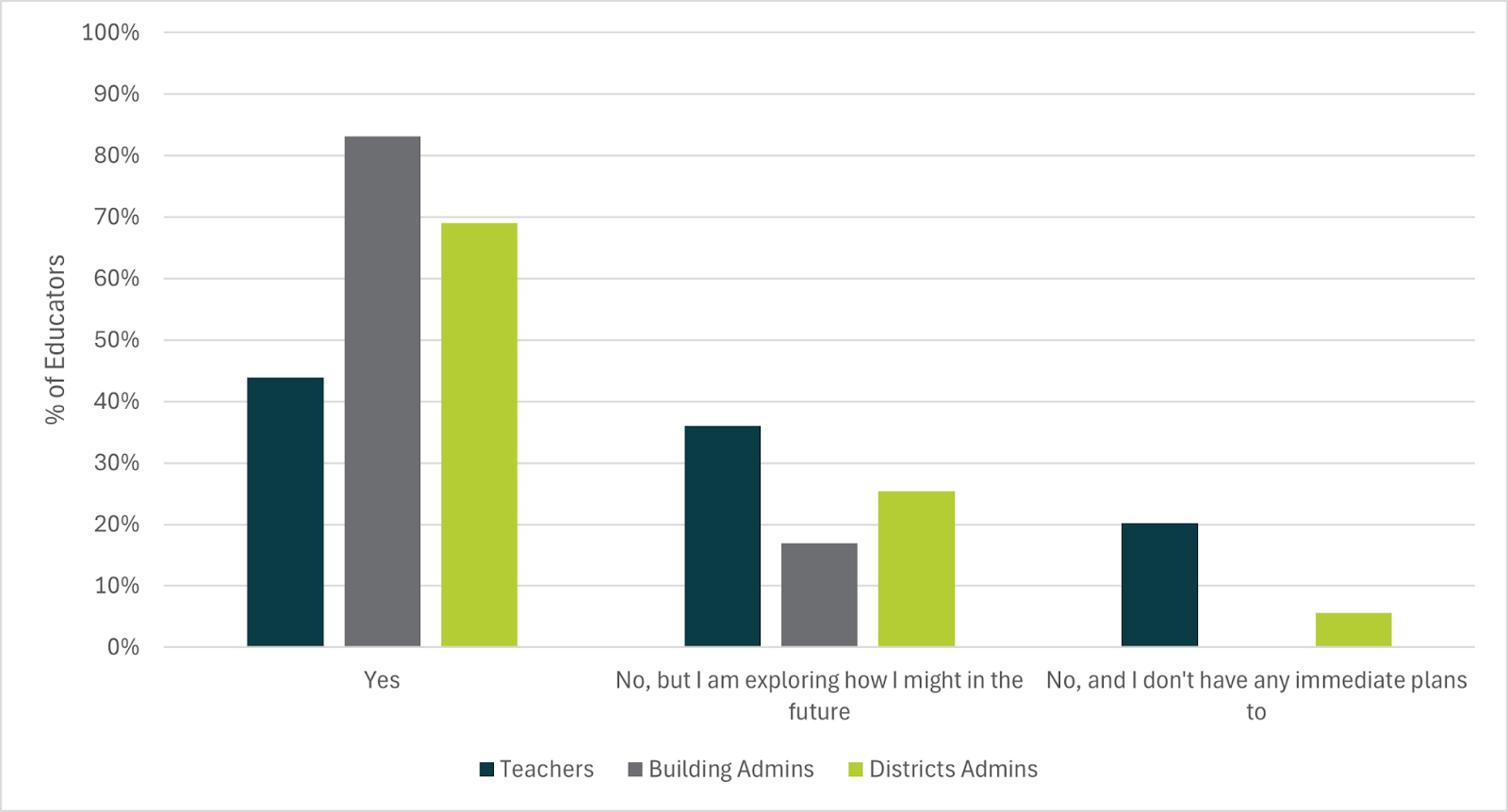
Similar to last year, for district administrators who reported that AI was not being used in their schools, those indicating that they were exploring future use of AI were considerably higher than those with no immediate plans to use AI. There were no building administrators who reported that AI was not being used in their schools, with no immediate plans to use AI. This finding is in line with data from last year, as well as the previously reported enthusiasm of building administrators to incorporate AI into their schools.
Educators who indicated that they were using AI, or that AI was being used in their school, were asked to explain how AI was being used in classrooms. These responses are summarized in Table 3 below. Responses were grouped into categories, and a brief explanation, followed by quotes that provide examples of each, is provided for context.
Table 3 highlights various applications of AI in the classroom as reported by educators, reflecting the diverse uses of AI in schools. Educators reported using AI for instructional planning, student support and personalization, assessment, creative uses, and communication. Many uses are strikingly similar to responses from the 2024 survey. Noticeably, in both the 2024 and 2025 surveys, educators reported using AI to support instructional planning and development, for student support and personalization/differentiation, assessment, communication, and administrative tasks. Given the results detailed in Figure 4 above and Table 3 below, it seems that overall, teachers are increasingly using AI as well as continuing to use it in multifaceted ways in their classrooms.
Table 3. Educators' Reported Use of AI in the Classroom
Category | Explanation | Educator Quotes |
|---|---|---|
Instructional Planning & Resource Creation | Educators use AI to design lesson plans, generate assignments, rubrics, quizzes, and other instructional materials. | “Creating assignments, responding to emails and assignment submissions, creating rubrics.” |
Student Learning Support & Personalization | AI is leveraged to individualize learning, provide scaffolding, support goal setting, and increase student engagement. | “I use it to coach students in goal setting and time management.” |
Assessment & Feedback | Teachers use AI to create or modify assessments, give feedback, and check for student understanding. | “Giving practice free response feedback. Developing examples, activities, and problems.” |
Student Use of AI for Learning | Students interact directly with AI for writing help, research, critical thinking, and developing AI literacy. | “My students have used a chatbot to learn about cyber safety.” |
Creative & Visual Applications | AI is used for multimedia creation, visual art, and text-to-image explorations. | “Canva and Adobe Express image creation.” |
Communication & Administrative Support | AI assists with administrative tasks like drafting emails, newsletters, and planning communications. | “To help with brainstorming ideas for my classroom, writing emails, planning out tutoring.” |
AI Literacy, Ethics & Responsible Use | Emphasis on teaching students ethical, responsible AI use and understanding its limitations. | “Having students use it when studying - both as a tool as well as bringing awareness to how it can lead them in the wrong direction.” |
To understand how educators are—or are not—using AI, it’s important to understand what barriers exist concerning AI implementation. Educators were asked, What barriers, if any, are keeping you from using artificial intelligence (AI) in your professional role, or using AI with your students?
Table 4 below provides a summary of the types of barriers identified by educators alongside examples of each in practice. Mirroring the results from last year's survey, educators reported barriers that fell into three categories: logistical barriers, institutional barriers, and ethical barriers. The most frequently mentioned were logistical barriers, with educators again reporting lack of training or knowledge and time constraints among the most common barriers. Educators also reported institutional barriers such as blocked websites/software and a lack of clear guidance on AI use. Perhaps the most difficult barrier to address is ethical concerns around AI, such as philosophical and environmental concerns, as well as concerns over student misuse and cheating. Our sentiments from last year's report remain true: simply addressing logistical barriers may not produce the lasting, institutional change that building or district leaders desire. School leaders need to take them seriously and address them directly, including ethical concerns alongside other steps such as making AI an available tool and training educators on its use.
Table 4. Themes Surrounding Barriers to AI Use in Classrooms
Theme | Explanation | Representative Quote | |
|---|---|---|---|
Lack of Training & Knowledge | Educators frequently cited limited training or awareness of how to use AI tools effectively, especially in specific content areas or with younger students. | “Lack of training and how to effectively teach students on how to use AI appropriately. Because we know they are using it anyway to get an answer for almost every class.” | |
Time Constraints | Many educators expressed that they do not have time in their schedule or workday to explore, learn, or integrate AI meaningfully. | “I need to learn more in order to know how best to integrate AI into my already jam packed curriculum. Finding the time to do this has been challenging.” | |
District Blocks & Policy Limitations | A significant number of teachers indicated that AI tools are blocked by their school or district, or that clear usage policies are lacking. | “My district has blocked ChatGPT.” | |
Ethical, Philosophical, or Environmental Concerns | Some educators reported personal or institutional hesitation about AI based on ethics, student development, or environmental impact. | “There is no reason I need to have my students utilizing something that is draining our planet of vital resources so they can avoid doing thinking on their own.” | |
Student Misuse & Cheating | Concerns about students using AI to bypass learning, cheat, or avoid building foundational skills were widespread. | “Students are using AI to write papers and complete homework instead of using their own ideas.” | |
Age or Developmental Appropriateness | Some educators, particularly at the elementary level, felt AI use was not suitable for their students due to age or developmental level. | “I teach 4th grade and there is nothing that I can utilize AI for.” | |
Lack of Reliable or Appropriate Tools | Teachers sometimes noted a lack of content-aligned AI tools or concerns about hallucinations and the inaccuracy of current platforms. | “Hallucinations from AI. The programs that are currently considered safe for students are not reliable for the subject matter that I teach.” | |
Implementation Confidence & Stigma | A number of educators mentioned personal uncertainty, fear, or a negative cultural view of AI use in schools. | “Fear! I don’t know how to transition students from a mindset of using AI to shortcut or cheat to enhancing their learning.” | |
Do Educators Trust AI Systems? What Are Their Primary Concerns About AI?
All educators who participated in the survey were asked to rate their level of trust in AI from 0 (no trust) to 100 (complete trust), with 50 indicating a moderate level of trust, 450 educators responded to this question. The average or mean score for all educators was 58.4, indicating a moderate level of trust in AI overall and an increase of approximately 18% from 2024 to 2025.
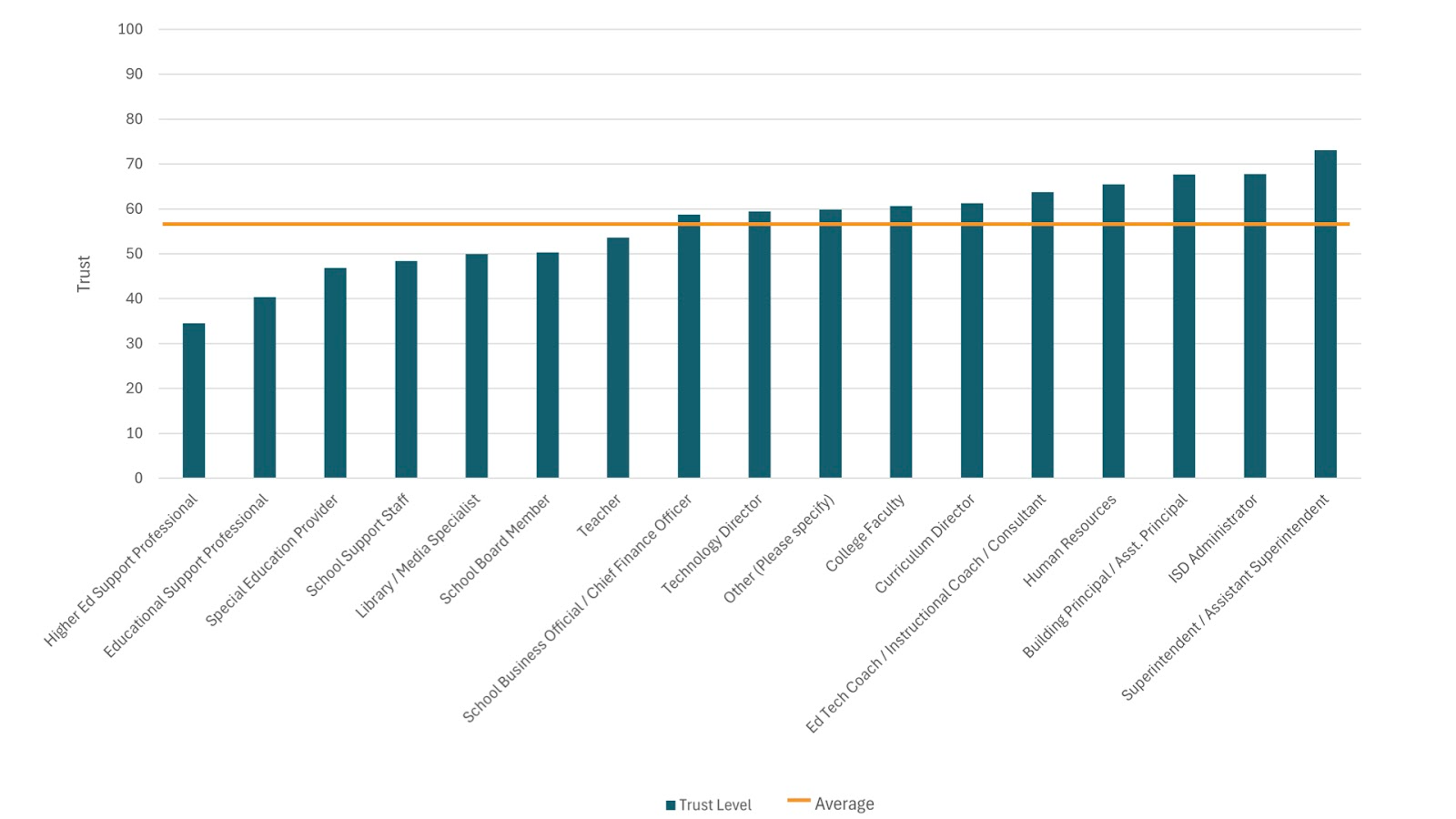
Figure 5 below details the level of trust by role relative to the average level of trust reported by all educators. Superintendents/assistant superintendents (73.0), ISD administrators (67.7), building principal/assistant principals (67.7), human resources (65.5), ed tech coach/instructional coach/consultant (63.8), curriculum director (61.3), college faculty (60.7), technology director (59.4), and school business official/chief finance officer (58.7) all reported levels of trust higher than the average (58.4). Similar to 2024, teachers' average trust (53.6) was below the average (58.4); however, trust did increase among teachers from an average of 43.7 in 2024.
Figure 5. Level of Trust in AI by Role
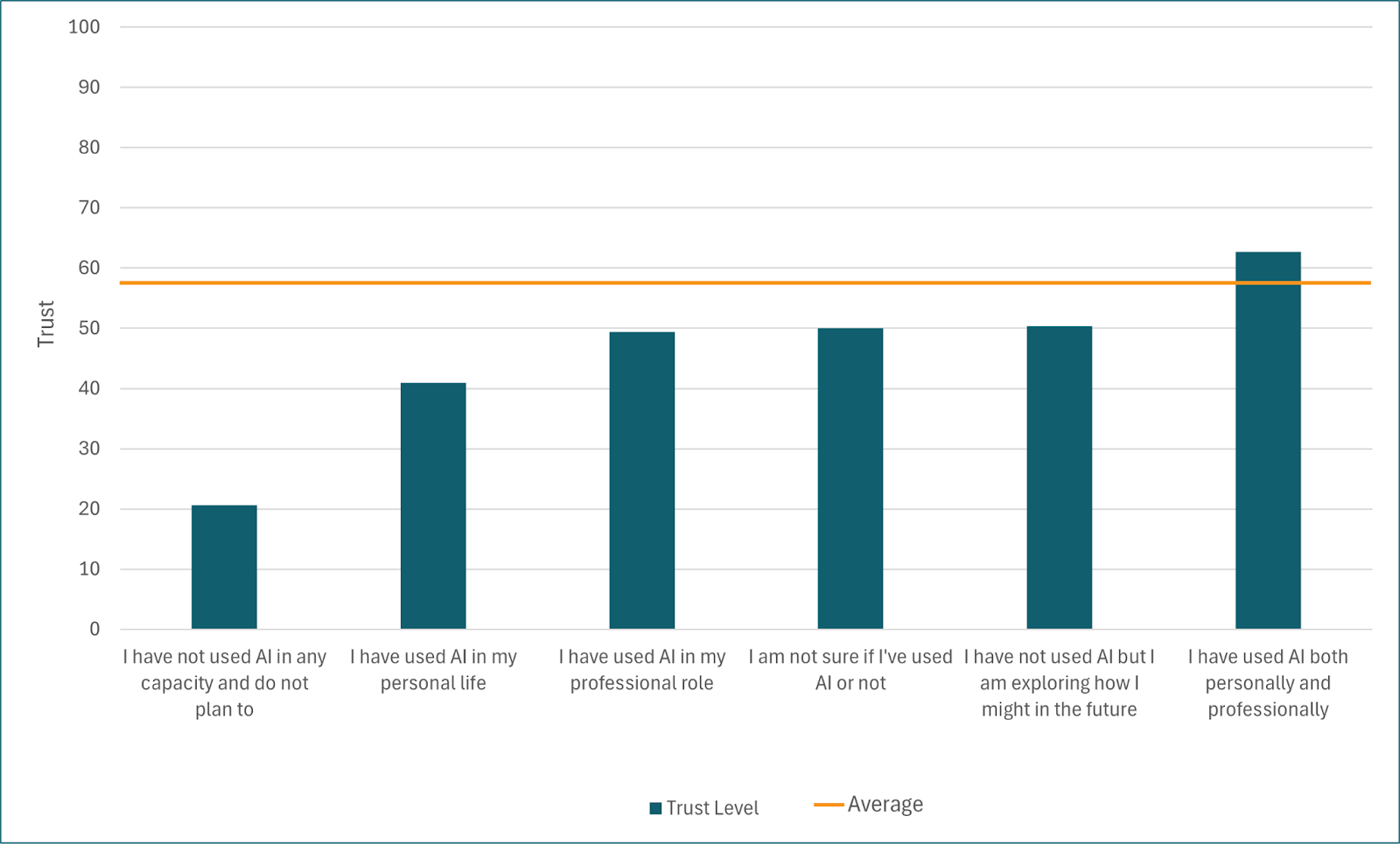
Similar to last year, we also considered educators’ level of trust by experience with AI. To ensure a more accurate representation/measurement of experience with AI, this question on the 2025 survey had an option for respondents to select I have used AI, both personally and professionally. Figure 6 below details the results. Unsurprisingly, educators who have not used AI and do not plan to have the lowest level of trust in AI, averaging approximately 20 out of 100 for both 2024 and 2025. Interestingly, this group was also the second smallest (after I am not sure if I’ve used AI or not), accounting for only 1.5% of respondents. Alternatively, the largest response group (75.4% of respondents) was those who reported I have used AI both personally and professionally, with an average trust level of 62.7.
Similar to last year’s survey, there remains a small but persistent group of respondents who report not using AI (or being unsure if they have). In 2025, about 7% of respondents fell into this group, compared with 20% in 2024. This represents a 13 percentage point drop, which is a 65% decrease relative to last year. While this group is shrinking, it has not disappeared.
Figure 6. Level of Trust in AI by AI Experience
Educators were asked to select all the areas in which they were concerned about AI integration. Figure 7 provides a detailed look at their responses. The top four responses remained unchanged from 2024 to 2025, highlighting the most pressing and persistent concerns for educators. Specifically, educators were concerned about inappropriate student use of AI, overdependence on technology, privacy and data security, and ethical considerations with AI content and curation. Educators, overall, were also concerned about a lack of human interaction for students, potential bias in AI, and adequate training for educators to integrate AI effectively, with all of these responses reported as being concerns for approximately 50% or more of educators.
When asked to expand on or provide other concerns around AI, educators spoke in detail about their concerns, and overwhelmingly, educators expressed deep concern for potential cognitive harm and over-reliance on AI by students. Educators reported being concerned that AI would diminish students' critical thinking, problem-solving, and creative thinking skills, as well as enable an over-reliance on cognitive shortcuts. This unease echoes those reported by educators in 2024, where educators noted concerns regarding AI encouraging intellectual laziness, negative impacts on students' critical thinking, increased risk of cheating, and accusations of cheating.
While educators have numerous concerns regarding AI, the most salient tend to be those relating to cognitive harm (inappropriate use, over-dependence) and ethics (privacy, bias). A lesser percentage were concerned about logistical elements such as cost.
Figure 7. Concerns Regarding AI
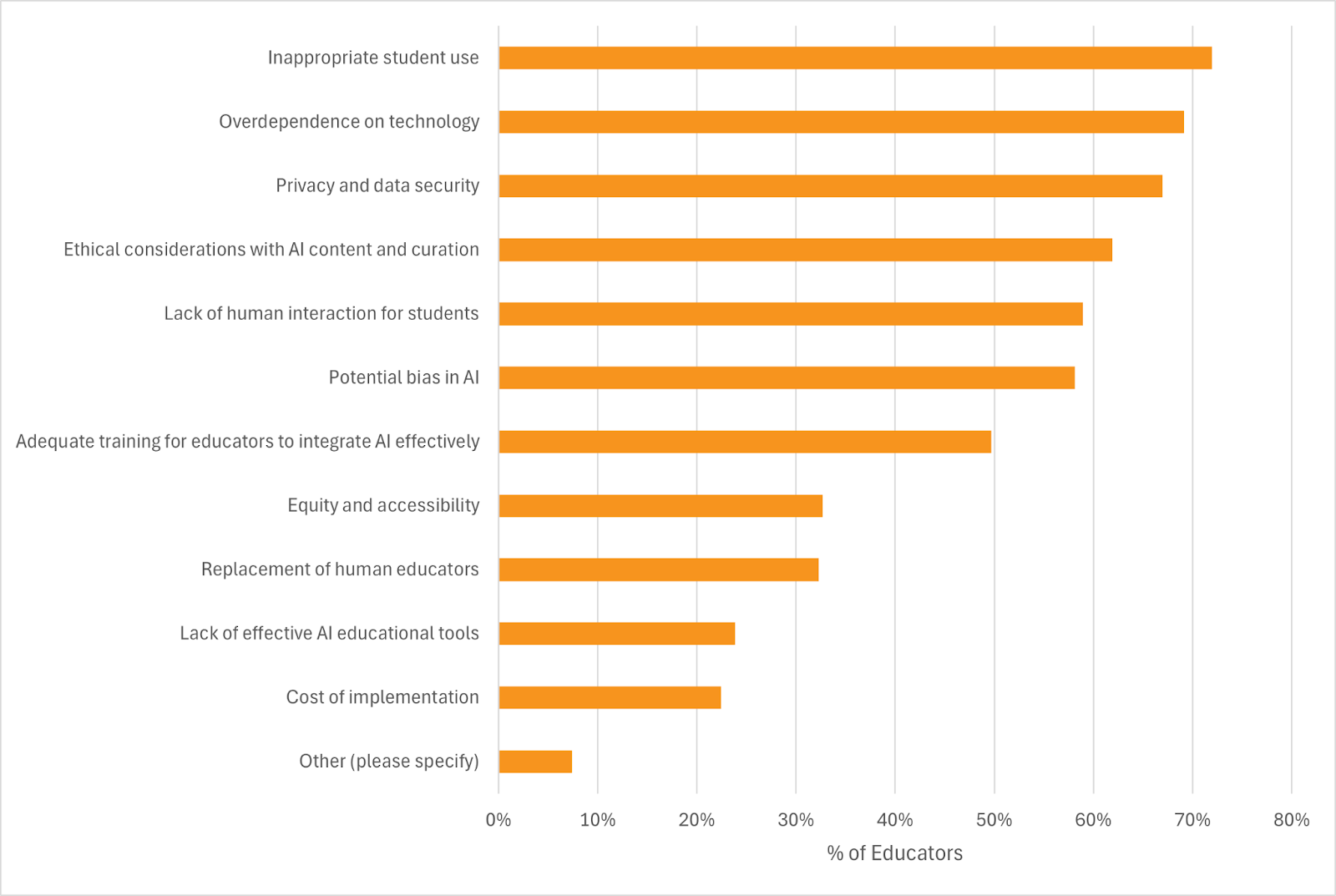 Table 5. Themes Surrounding AI Concerns
Theme | Explanation | Representative Quote |
|---|---|---|
Cognitive Harm & Student Overreliance | AI use may diminish students’ critical thinking, creativity, and problem-solving skills, while enabling academic shortcuts. | “By far my biggest concern is related to overdependence, but more explicitly stated as harm to cognitive development and learning from overdependence or even limited use at particular intervals in the learning/thinking process, growing research is suggesting that while efficiency is being gained, cognitive offloading is leading to harm in cognitive capacity.” |
Environmental & Resource Impact | Educators worry about the high energy consumption and environmental cost of AI technologies. | “Extreme use of energy contributing to climate change.” |
Inaccuracy & Misinformation | Concerns about AI generating incorrect, misleading, or fabricated information that could misinform students or educators. | “AI is often inaccurate or incorrect; for example there is a road on a hill in the district where I teach called Mound Street…When I use Google AI to find out more, AI tells me that yes it was built by Native Americans and gives me a history of this mound but when I click on the resources, it's the history of the mounds in Detroit over 120 miles away.” |
Equity, Access & Digital Divide | Fears that AI tools will not be equally accessible to all students, particularly those with disabilities or limited digital access, exacerbating inequality. | “The GIGANTIC digital divide it's going to create between those learning to use it and those blocking it.” |
Lack of Regulation, Ethics & Oversight | Educators are concerned about the absence of clear policies, ethical standards, and the risk of biased or manipulated content. | “Who controls what's presented as truth as Elon Musk and others want it to be programmed to avoid telling the true or full version. Supporting unethical/unregulated systems. Lack of clear regulations.” |
Job Security & Quality of Teaching | Concerns that AI could replace educators or degrade the teaching profession by minimizing the human element in instruction. | “High school teaching jobs will be made obsolete.” |
How Do Educators Envision the Future of AI?
Educators overwhelmingly seem to think that AI is in many ways “here to stay” in education, with 67.0% reporting that AI will be used very significantly in the next 5 years (an additional 27.1% responding that AI will be used somewhat significantly). In 2024, 10% of educators did not think AI would be used significantly in the next 5 years; in 2025, only 3% of educators shared this sentiment.
As discussed above, both use and trust surrounding AI have increased since last year's survey. Ninety-four percent of district administrators and 100% of building administrators reported either currently using AI in their schools/districts or exploring future use. Further, both groups placed the level of prioritization of AI relatively high, around 70/100 for both groups (74.1 for district administrators and 70.1 for building administrators compared to 52.4 for teachers).
While teachers’ trust was lower than the average, it was still higher than previously reported in 2024. Given the increased use and prioritization of AI, specifically, it is necessary to understand how they envision using AI so that appropriate support and resources can be developed and tailored to their needs and visions.
Figure 8. Promising Uses of AI
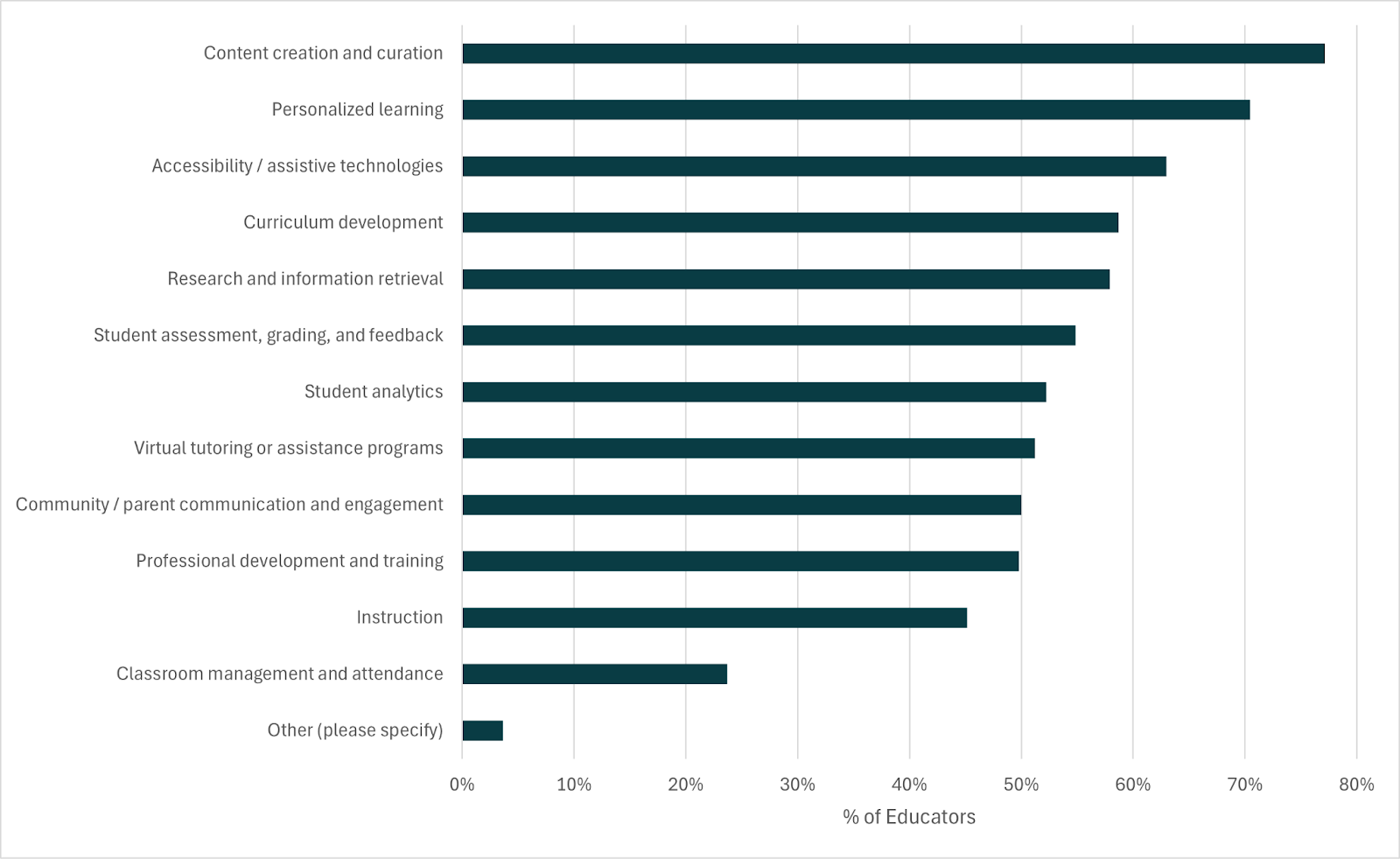
We also asked all educators, In what areas they think AI can be a useful tool. The results are detailed in Figure 8 above. Educators remained most optimistic about AI assisting with content creation and curation, personalized learning, and accessibility/assistive technology.
Educators reported feeling that AI would be a useful way to help them generate and curate content, personalize learning for students, and increase the accessibility of their content. AI’s utility for more interpersonal aspects of teaching (instruction, classroom management) was less commonly reported.
Table 6. Themes Surrounding Promising Uses of AI
Theme | Explanation | Educator Quote |
|---|---|---|
Administrative Efficiency & Task Simplification | AI is seen as a tool to reduce routine workload, such as form completion, supply tracking, and compliance tasks. | “Fulfilling the overly formulaic requirements of lesson plans and other forms, helpful for me to say to AI, here is what I am going to teach, now fill in the boxes on the school’s lesson plan form.” |
Communication & Content Creation | AI supports drafting emails, newsletters, and promotional content efficiently and professionally. | “Social media tool to promote my district.” |
Instructional Support & Professional Collaboration | AI can assist in analyzing student data, planning interventions, and supporting teacher collaboration and learning. | “Data analysis and intervention creation.” |
Language Access & Equity | AI helps bridge communication barriers through translation and accessibility for diverse learners. | “Translation.” |
Teacher Wellbeing & Motivation | Educators see AI as a way to alleviate burnout and make tasks more manageable, improving morale. | “Remedy for teacher burnout and procrastination.” |
Cautionary or Critical Perspectives | Some responses reflect skepticism about AI’s value, citing concerns about student learning, misinformation, or resistance. | “None. It is destroying our sense of humanity.” |
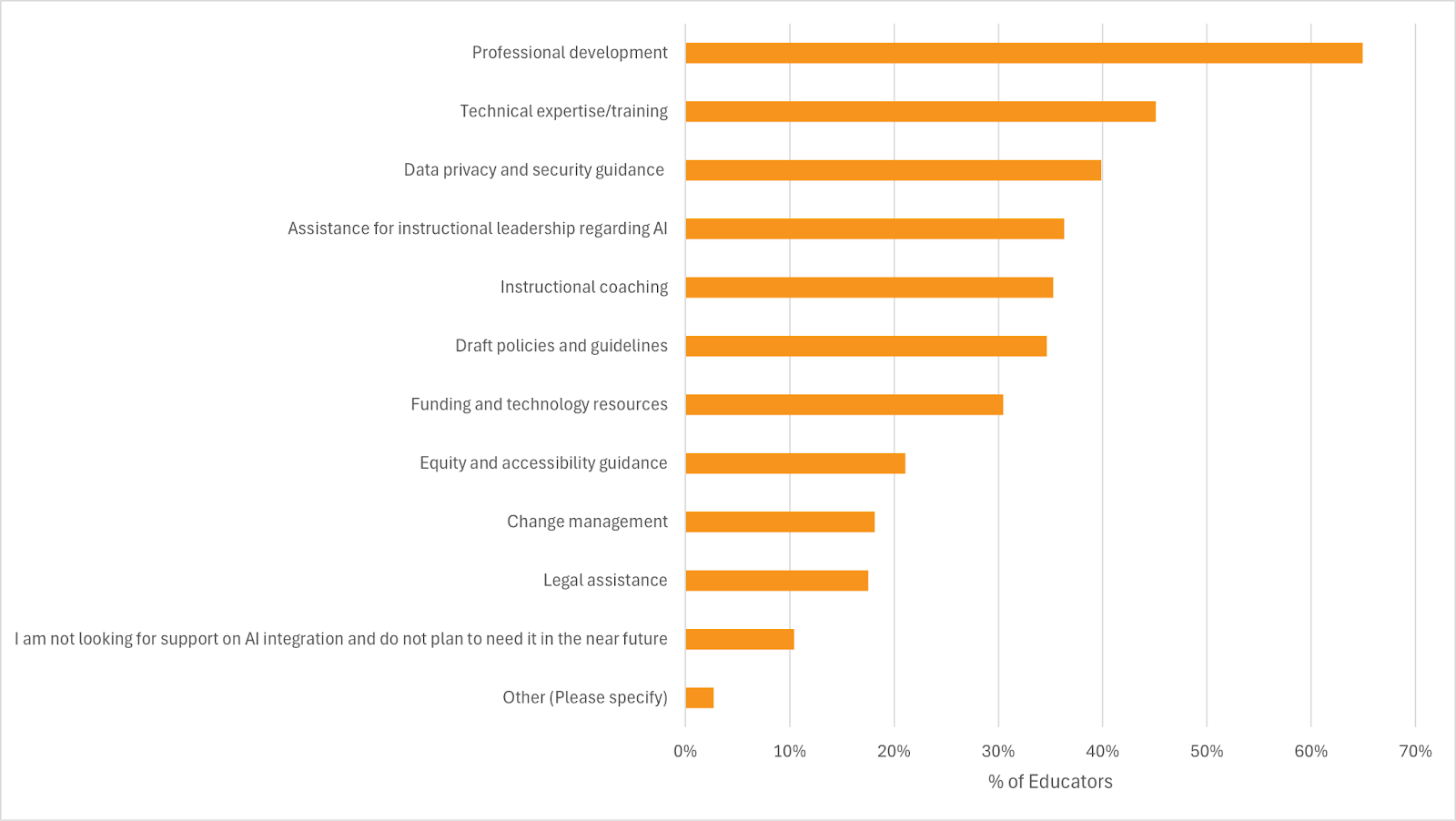
To understand how to better support teachers and schools in AI implementation, educators were asked, In what areas do you need support for integrating artificial intelligence (AI) into your school/district. Figure 9 below details their responses. The top three areas of needed support were identical to what was observed in last year’s survey—professional development, technical expertise/training, and data privacy and security guidance. These findings highlight a continued need for educators to be supported in these areas. Further, these areas are all highly aligned and suggest educators are looking for experts to help them develop their skills and knowledge surrounding AI, perhaps particularly as it relates to security and privacy concerns.
Figure 9. Areas of Support Needed Regarding AI Integration
How Does AI Fit Within District Policy and Vision?
When asked, Has your school, school board, or governing body adopted any artificial intelligence (AI) policies/guidelines, 50.7% indicated yes, with a fairly even split between no (23.3%) and no, but we are in the process of drafting AI policies/guidelines (26.0%). In 2024, only 31.7% of district leaders indicated that their school, school board, or governing body had adopted AI policies or guidelines, with an additional 33.3% indicating they were in the process of drafting policies or guidelines.
When asked, How does artificial intelligence (AI) fit within your existing mission/vision/strategic plan for your district or school, 46.8% of administrators indicated that AI was already included or that they were currently revising their mission, vision, or strategic plan to incorporate AI. In 2024, only 30.6% of administrators responded that AI was currently, or soon-to-be, a part of their mission, vision, or strategic plan. It is worthwhile to note that a majority of respondents in both 2024 (62.6%) and 2025 (51.9%) indicated that they had not yet considered the alignment between AI and their mission, vision, or strategic plan.
Key Takeaways
AI Policy and Vision Take Shape Amid Uneven Progress
Over the past year, schools and districts have made notable strides toward formally addressing AI. More leaders are developing policies and weaving AI into their long-term vision, signaling a shift from casual experimentation toward intentional planning. Yet this momentum is far from universal. Many districts remain in early stages—drafting policies, debating priorities, or not yet considering how AI fits into their broader mission. This uneven landscape suggests that while the conversation around AI is maturing, leaders will need to balance forward motion with inclusive dialogue, ensuring that policy, vision, and classroom practice evolve together.
Growing AI Use, but Trust Gaps Remain
Teachers are adopting AI at a rapid pace, yet their trust and confidence in the technology still trails behind that of administrators. This gap suggests that increased use does not always translate into increased comfort as many educators remain cautious, particularly around issues such as student safety, ethics, and cognitive impacts. For district and building leaders, the challenge is twofold: sustain the momentum of adoption while fostering trust through transparent communication, inclusive dialogue, and professional learning that addresses teachers’ specific concerns. Bridging this divide will be key to ensuring AI is implemented in ways that are both effective and broadly supported.
Educators’ Growing Use of AI Balanced by Practical Hurdles
Classroom use of AI by teachers has surged, with applications ranging from lesson planning to personalized student support. Many educators see even greater potential for AI to enhance instruction, accessibility, and content creation. However, these aspirations are tempered by challenges—particularly time constraints, limited training, and unclear district policies. Addressing these barriers with targeted professional development and clear guidance will be key to turning vision into sustainable practice.
Remaining Pockets of AI Skepticism
Although far fewer educators now say they have never used AI, a notable group remains disengaged and less trusting of its potential. These educators’ perspectives are important, especially as districts move forward with policy development and implementation. Including their voices in planning and providing tailored, trust-building support will help ensure AI strategies reflect the full spectrum of teacher experiences and concerns.
Final Thoughts
If there is to be one takeaway from this research, it is that Michigan educators are at an interesting crossroad with AI: usage is rapidly expanding while trust and preparedness are still catching up. The data reveal a complex landscape where AI adoption has nearly doubled among teachers (from 22.4% to 43.9%) and district administrators (from 36.0% to 69.9%) in just one year, yet significant challenges remain.
Over 75% of educators have used AI both personally and professionally, and 94% believe AI will be used significantly in education within five years. Teachers are already leveraging AI for instructional planning, student personalization, assessment, and creative applications. Building administrators show particular enthusiasm, with over 80% reporting AI use in their schools and none indicating they have no plans for implementation.
While usage surges, teachers' trust in AI grows slowly. The top concerns remain remarkably consistent, inappropriate student use, overdependence on technology, and privacy issues, with educators expressing deep worries about AI's potential to diminish students' critical thinking and problem-solving abilities. Practical barriers compound these concerns: limited training, time constraints, and unclear district policies continue to hinder meaningful integration.
While more districts have adopted AI policies (50.7% vs. 31.7% last year) and are incorporating AI into strategic plans (46.8% vs. 30.6%), over half still haven't considered how AI aligns with their mission and vision. This suggests that while formal structures are developing, many districts are still making sense of the reality of AI use in their classrooms.
Looking forward, three priorities emerge:
Districts must bridge the trust gap through comprehensive professional learning that addresses both technical skills and ethical concerns.
Clear policies and guidelines are essential—teachers need to know not just how to use AI, but when and where it's appropriate.
Persistent skeptics must be included in the conversation; their concerns about cognitive harm and equity deserve serious consideration as districts shape their AI strategies.
The transformation is already underway. Students and teachers are using AI today, often without adequate guardrails or support. The question is no longer whether AI will be part of education, but how thoughtfully and equitably we can shape its integration. Districts have the opportunity—and responsibility—to harness AI's potential while protecting the essential human elements of teaching and learning.