

Just the essentials: What mentors of online students want and need from professional learning

Overview
Online learning, while affording students academic, social, and logistical flexibility and autonomy, presents distinct challenges that differ from those in the face-to-face learning environment (Curtis & Werth, 2015). Online learning requires students to be self-motivated, to utilize metacognitive and time management skills, to develop and adhere to learning routines, and to communicate effectively. Notably, these skills must be developed and utilized without their instructor's synchronous in-person support, which may be a shift from what they are accustomed to. Because of these differences, it is not uncommon for students to need to “learn how to learn online” (Curtis & Werth, 2015; Digital Learning Institute, n.d.; Johnson et al., 2023). These challenges, combined with data indicating persistent discrepancies in pass rates between virtual and non-virtual coursework, highlight a need for robust student support. Onsite mentors help address this need.
In online learning, mentors are school district employees who provide support to students taking virtual courses. In Michigan, schools must provide students taking virtual courses with a mentor (Michigan Department of Education, 2022). Research indicates that students perform better with mentor support (Borup et al., 2018; Lynch, 2019; Roblyer et al., 2008). However, what specific supports can be provided to mentors to enhance their effectiveness? Gaining a better understanding of the challenges mentors face, the supports they still need, and how they perceive their own efficacy and abilities—including the effectiveness of their mentoring strategies—can help educators design more targeted professional learning opportunities, ultimately leading to positive effects for students.
Mentors as crucial student supports
Online learning can be an adjustment, especially for students experiencing it for the first time. A mentor’s support, thus, may begin even before students start online learning, by guiding them through an inventory for online learning readiness, and thoughtful discussions about course selection, for example (Michigan Virtual Learning Research Institute, n.d.). Indeed, mentors may be an especially helpful resource when other support systems in students’ lives (e.g., guardians) are unfamiliar with the process and expectations of online learning, or are unavailable to provide direct assistance (Michigan Virtual, 2020).
When students begin to navigate the online learning environment, mentors are available to help them learn the routines, habits, and strategies necessary for success (Borup & Stimson, 2019; Michigan Department of Education, 2022; Michigan Virtual Learning Research Institute, n.d.). Overall, research suggests that mentors can improve virtual pass rates (Roblyer et al., 2008; Lynch, 2019). However, what do mentors need to be successful in their roles, and how can their effectiveness be increased?
Professional learning can boost mentors’ effectiveness
Professional learning (PL) or professional development (PD) is a means of expanding educators' pedagogical knowledge, skills, and beliefs (Gesel et al., 2021). PL also enables educators to remain up to date on current best practices, meet the unique needs of their students, build professional networks, and ensure compliance with state licensure requirements (Cuccolo & DeBruler, 2023). Importantly, well-designed and engaging PL can benefit students (e.g., Yoon et al., 2007).
In an intimate look at what educators want and need from their PL, Anne Perez highlights the importance of flexible, specific, relevant, and expert-led learning opportunities. Educators want PL that fits into their busy schedules, aligns with the context in which they teach, and is facilitated by someone knowledgeable and passionate. Similarly, additional research conducted with Michigan Virtual’s own educators has highlighted their preference for PL tailored to their needs, providing space to practice and receive feedback on the skills and concepts within the course (Cuccolo & DeBruler, 2024).
There is some evidence that practice-focused professional learning can increase teachers’ use of effective classroom practices, with resulting benefits for students (e.g., increased performance on tests of content knowledge; Roth et al., 2019). Other studies have found positive relationships between teacher-driven, collaborative, practice-focused PL and student outcomes (e.g., Heller et al., 2012). Giving educators some degree of choice over when and how they engage in professional learning courses that align with their needs and preferences can also improve engagement (Perez, 2023). All together, ensuring educators perceive PL as relevant and impactful is particularly important for sustaining engagement (Bowman et al., 2022; Kale, 2018; Masuda et al., 2013; Roth et al., 2019; Zhang & Liu, 2019).
Current Study
Mentors can be a strong asset to students taking virtual courses, and supporting these mentors is crucial to student success. Given that PL can provide significant benefits to education professionals, it is important that mentors receive learning tailored to their needs. Thus, the question arises: How can professional learning better support mentors by addressing their current practices, key challenges, and unmet needs?
Therefore, the goal of the current study was to gain a more accurate understanding of the following:
- Who are the mentors enrolling in this professional learning course?
- Why did they decide to take this course, and what did they find most valuable about it?
- What strategies do mentors find effective, and how do they apply them as they work with online learners?
- What challenges do mentors face, and what support/resources do they need?
To answer these questions, we surveyed mentors of online learners via an optional end-of-course survey embedded in the Mentor Essentials: Strategies for Guiding Online Learners course. In this free, self-paced course, learners explore the essential responsibilities of a mentor and gain strategies to effectively guide learners through the unique challenges of online learning. A total of 65 mentors completed the survey, providing us with valuable insights into their experiences.
Who are the mentors enrolling in this Mentor Essentials course?
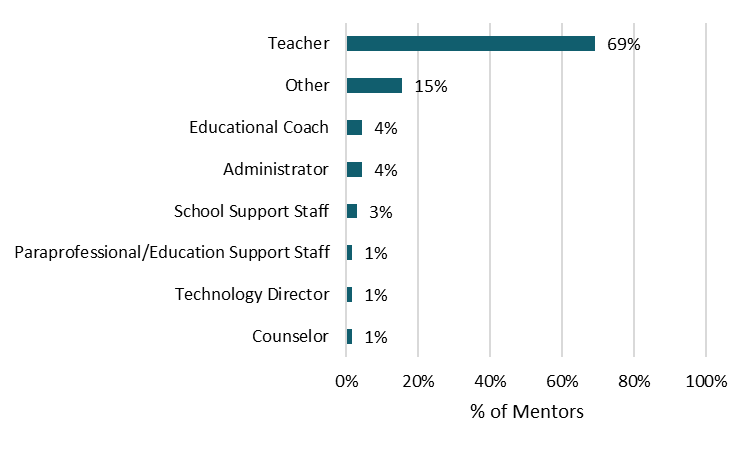
We know that mentors of online learners often balance several roles at once. Of the 65 participants who completed the survey, all but one reported holding more than just the role of mentor, with 69% (n = 49) selecting “teacher” in addition to their mentoring role. Fifteen percent (n = 11) indicated a role of “other” in addition to their mentoring role. Examples of these “other” roles included intervention specialist, athletic coach, and tutor. The remaining 15% (n = 11) noted roles of educational coach, administrator, school support staff, paraprofessional, technology director, and school counselor. See Figure 1 below.
Figure 1. Role (in addition to being a mentor)
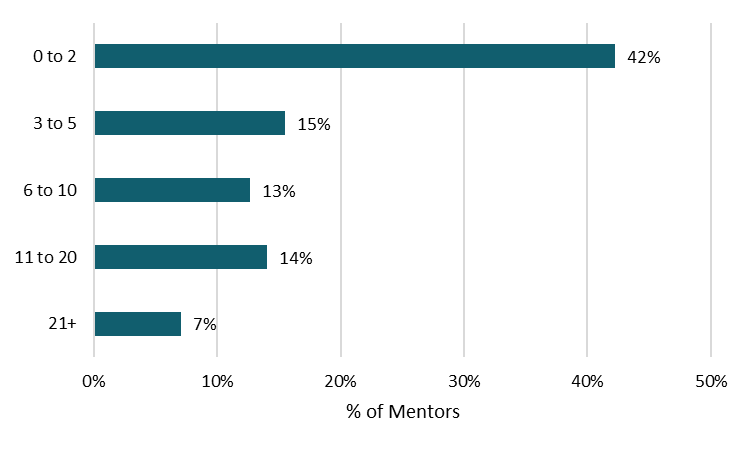
These 65 participants also represented a range of experience. Approximately 46% of survey participants (n = 30) reported having 0-2 years of mentoring experience, and 17% (n = 11) reported 3-5 years of experience. Taken together, 63% (nearly two-thirds of the survey participants) reported five or fewer years of mentoring experience, indicating they are relatively new to mentoring. On the other hand, 23% of survey participants (n = 15) indicated that they are seasoned mentors with 11 or more years of experience. See Figure 2 below.
Figure 2. Years of experience as a mentor
Why did learners decide to take this course?
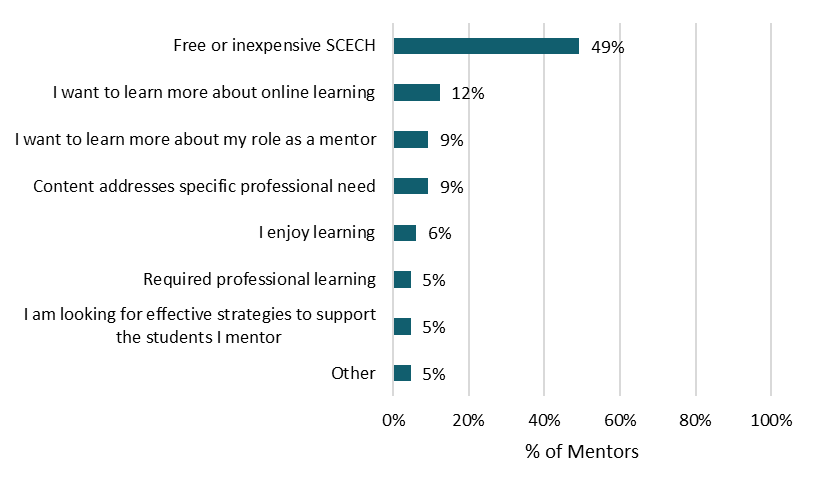
While mentors indicated that they enrolled in the Mentor Essentials course for a variety of reasons, approximately half (49%, n = 32) reported enrolling because it was a free or inexpensive SCECH. It should be noted that every five years, education professionals in Michigan are required to complete 150 SCECHs for licensure renewal and progression. Thus, it is understandable that meeting this criterion would be a strong motivator for enrollment. Twelve percent (n = 8) reported enrolling because they wanted to learn more about online learning, 9% (n = 6) reported enrolling because they wanted to learn more about their role as a mentor, and 9% (n = 6) reported enrolling because the content addressed a specific professional need. The remaining 20% (n = 13) enrolled for various reasons, including that they enjoy learning, the course was required, and they sought strategies to support the students they mentor. See Figure 3 below.
Figure 3. Reason for enrollment
We also examined mentors’ reasons for enrolling by level of experience, which again showed that, by far, the allure of a free or inexpensive SCECH was the biggest motivator for enrollment across all categories.
What aspects of the course did learners find valuable?
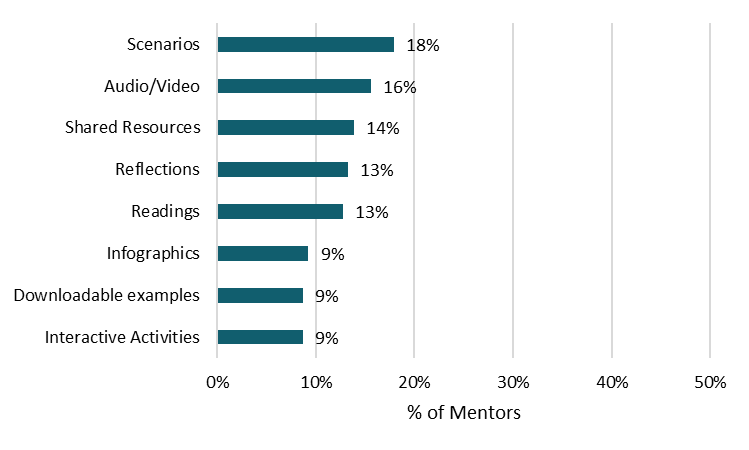
To help facilitate the development of engaging and impactful PL modules and courses, we examined learners’ perceptions of effective course elements. The course design element learners found to be most effective was scenarios (18%, n = 31). Responses indicated that other effective design elements were audio/video (16%, n = 27), shared resources (14%, n = 24), reflections (13%, n = 23), and readings (13%, n = 22). Responses suggested that the elements learners found to be least effective were infographics (9%, n = 16), downloadable examples (9%, n = 15), and interactive activities (9%, n = 15).
Figure 4. Effectiveness of course design elements
What strategies do mentors find most effective?
Within the Mentor Essentials course, learners are introduced to and explore strategies to help them guide learners through the unique challenges of online learning. Strategies covered within the course are grouped into four different categories:
- Strategies for nurturing students (i.e., focused on communication, relationship building, and establishing mentoring routines),
- Strategies for monitoring and motivating students (i.e., focused on the students’ engagement with course content),
- Strategies for improving communication
- Student-focused communication (i.e., encouraging communication with the mentor/teacher about their grades)
- Mentor-initiated communication (i.e., across stakeholders, communication to students)
- Strategies for improving administrative or logistical challenges (i.e., focused on efficiency)
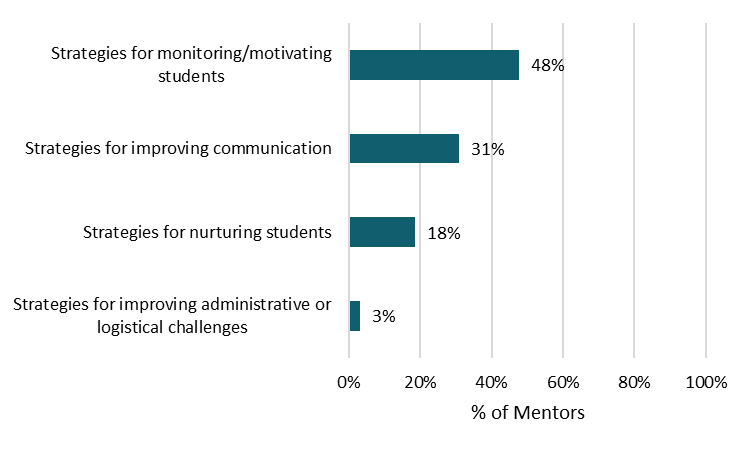
When learners were asked which group of strategies they felt would be most effective in supporting students, nearly half (48%, n = 31) reported that strategies for monitoring and motivating students would be most effective, followed by strategies for improving communication (31%, n = 20). A smaller portion of participants reported strategies for nurturing students (18%, n = 12) and strategies for addressing administrative or logistical challenges (3%, n = 2) as the most effective student support strategies, highlighting a general consensus that strategies for monitoring, motivating, and communicating with students are not only necessary but effective for bolstering students’ success in their online courses.
Figure 5. Perceived effectiveness of strategies
What challenges do mentors face?
Research shows that professional learning is most effective when it aligns with educators’ goals and context (Yoon et al., 2007). Michigan Virtual’s work also echoes this, highlighting the value of relevant, educator-centered learning experiences that address educators' needs (Cuccolo & DeBruler, 2023; Perez, 2023). With that in mind, we asked mentors about the challenges they face in their roles to better understand their experience and inform the development of learning opportunities tailored to their needs.
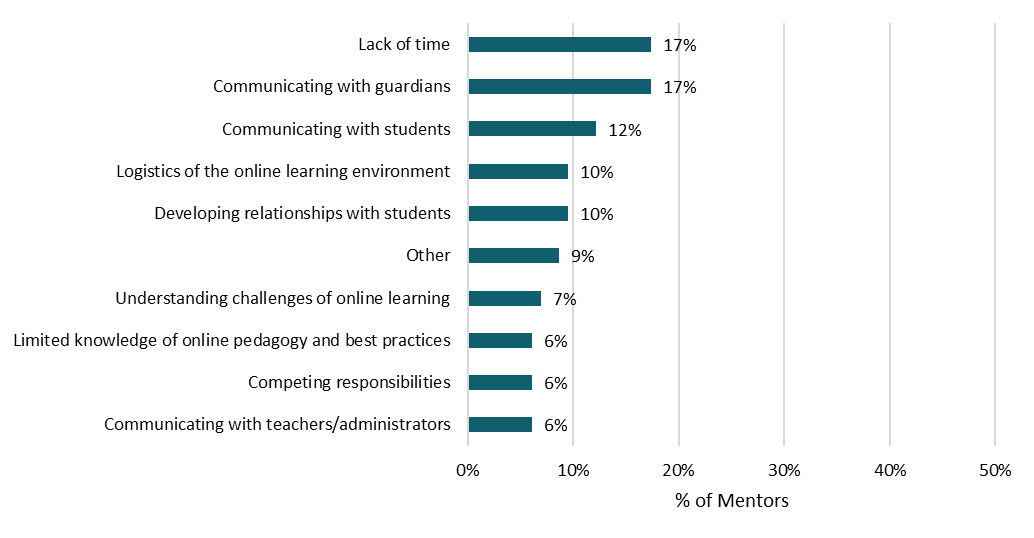
The 65 mentors included in the study reported a variety of challenges. According to learners, the most challenging aspects of their role as a mentor of online learners were a lack of time (17%, n = 20) and communicating with guardians (17%, n = 20). In addition to time and guardian communication challenges, learners highlighted other challenges, including communicating with students (12%, n = 14), the logistics of the online learning environment (10%, n = 11), and developing relationships with students (10%, n = 11). See Figure 6 below for an overview of how challenging learners rated the following aspects of their mentor roles.
Figure 6. Challenges reported by mentors
What supports do mentors still need to be successful?
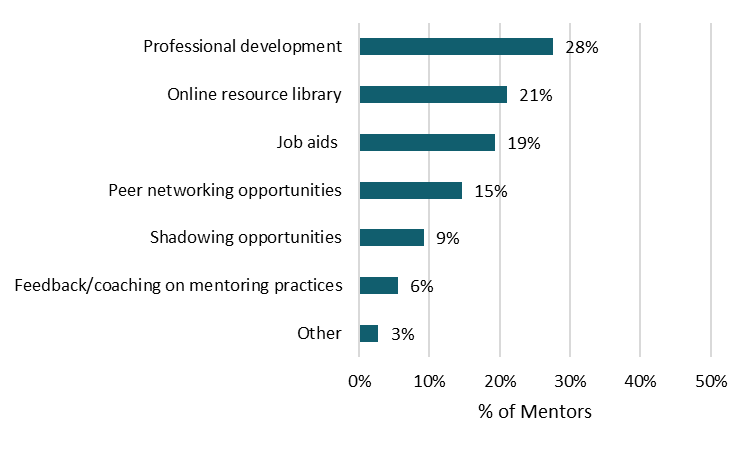
When we asked mentors what supports they still need to be successful, their responses specified that professional development was the most needed support (28%, n = 30), followed by access to an online resource library (21%, n = 23), job aids (19%, n = 21), and peer networking opportunities (15%, n = 16). See Figure 7 below for additional details.
Figure 7. Mentors desired supports
Key Takeaways
Most mentors are wearing two hats, as nearly 7 in 10 respondents (69%, n = 49) are also classroom teachers. While this dual role can be a strength (mentors who are also teachers can offer real-time instructional experience), it also means their mentoring responsibilities are layered on top of what is likely an already full workload.
The lack of time and guardian communication are persistent pain points for mentors of online learners. Survey results indicated that the most challenging aspects of their role as a mentor were a lack of time (17%, n=20) and communicating with guardians (17%, n=20). These barriers point to a need for efficient, ready-to-use strategies and systems that reduce back-and-forth communication and streamline parental outreach.
Over half of survey participants (57%) reported having fewer than 5 years of mentoring experience, suggesting that many are new or relatively new to mentoring. This highlights that a large portion of mentors are likely still building their professional skill set and confidence while simultaneously supporting students learning online—making targeted, practical, and relevant support especially important.
The most needed support reported by participants was professional development (28%, n=30). To ensure professional learning is appropriately tailored to mentors’ needs, it is important to consider (1) what motivates mentors to enroll, (2) what design elements best support their learning, and (3) which mentoring strategies they most want to strengthen. These three considerations are summarized below.
- Enrollment is influenced by cost and incentives. About half of the mentors (49%, n = 32) reported enrolling because the course offered a free or inexpensive SCECH. Incentives, such as affordable or even free learning opportunities, can be a strong lever for increasing participation, especially for educators new to the field.
- Mentors value practical, example-rich learning. When asked what course design elements were most beneficial, mentors most often pointed to scenarios (18%, n = 31), followed by audio/video (16%, n = 27), shared resources (14%, n = 24), reflections (13%, n = 23), and readings (13%, n = 22). In other words, mentors value learning that shows what mentoring looks like in action and provides tools they can use immediately.
- The highest-priority skill areas are student motivation/monitoring and communication. Nearly half of mentors (48%, n=31) said strategies for monitoring and motivating students would be most effective in supporting learners, with communication strategies close behind (31%, n=20). This suggests that strategies to improve students’ motivation and communication are among mentors’ top “need-to-haves.” Mentors want ongoing learning that helps them navigate common challenges and sharpen the skills that matter most in day-to-day mentoring. Taken together, mentors report that professional development is strongly desired and that, to be effective, it should be cost-effective, practical, tailored to their needs, and include strategies for communication and student motivation.
In conclusion, these findings highlight a mentor workforce that often balances multiple roles and is still developing experience, while facing persistent challenges such as limited time and communication with guardians. Mentors of online learners are drawn to accessible, affordable professional learning and value designs that feel immediately usable, especially scenarios and practical resources. Above all, they want support that strengthens student motivation/monitoring and improves communication. By keeping professional learning targeted, job-embedded, and responsive to these needs, we can better equip mentors and, in turn, better support students.
References
Bowman, M. A., Vongkulluksn, V.W., Jiang, Z., & Xie, K. (2022). Teachers’ exposure to professional development and the quality of their instructional technology use: The mediating role of teachers’ value and ability beliefs. Journal of Research on Technology in Education, 54(2), 188-204, https://doi.org/10.1080/15391523.2020.1830895
Cuccolo, K., & DeBruler, K. (2023). Evaluating Professional Learning Course Offerings and Educator Engagement. Michigan Virtual. https://michiganvirtual.org/research/publications/evaluating-professional-learning-course-offerings-and-educator-engagement/
Cuccolo, K. & DeBruler, K. (2024). A Look Back At 3 Years of Michigan Virtual Research. Michigan Virtual. https://michiganvirtual.org/research/publications/a-look-back-at-3-years-of-michigan-virtual-research/
Curtis, H., & Werth, L. (2015). Fostering student success and engagement in a K-12 online school. Journal of Online Learning Research, 1(2), 163-190.
Digital Learning Institute. (n.d.). “What is Self Paced Learning? Definition, Benefits and Tips.” [Blog]. Retrieved from https://www.digitallearninginstitute.com/blog/what-is-self-paced-learning-definition-benefits-and-tips
Gesel, S. A., LeJeune, L. M., Chow, J. C., Sinclair, A. C., & Lemons, C. J. (2021). A meta-analysis of the impact of professional development on teachers’ knowledge, skill, and self-efficacy in data-based decision-making. Journal of Learning Disabilities, 54(4), 269-283. https://doi.org/10.1177/0022219420970196
Heller, J. I., Daehler, K. R., Wong, N., Shinohara, M., & Miratrix, L. W. (2012). Differential effects of three professional development models on teacher knowledge and student achievement in elementary science. Journal of research in science teaching, 49(3), 333-362.
Johnson, C. C., Walton, J. B., Strickler, L., & Elliott, J. B. (2023). Online teaching in K-12 education in the United States: A systematic review. Review of Educational Research, 93(3), 353-411. https://doi.org/10.3102/00346543221105550
Kale, U., & Akcaoglu, M. (2018). The role of relevance in future teachers’ utility value and interest toward technology. Educational Technology Research and Development, 66(2), 283-311. https://doi.org/10.1007/s11423-017-9547-9
Lynch, D. (2019, October 15). Strategies For Mentoring Online Students. Michigan Virtual. Retrieved from https://michiganvirtual.org/blog/strategies-for-mentoring-online-students/
Masuda, A. M., Ebersole, M. M., & Barrett, D. (2013). A qualitative inquiry: Teachers’ attitudes and willingness to engage in professional development experiences at different career stages. Delta Kappa Gamma Bulletin, 79(2), 6-14.
Michigan Department of Education (2022). Pupil Accounting Manual 2022-2023. Michigan Department of Education. Retrieved from https://www.michigan.gov/mde/-/media/Project/Websites/mde/OFM/State-Aid/Pupil-Accounting/Manual/2022-23-Pupil-Accounting-Manual.pdf?rev=0823e4ecdad84ac5ba32b9b7439fcafa&hash=0CDF461FF9269C0842C3A39B29C2ED6D
Michigan Virtual. (2020, January 17). Why Mentors Matter: A Conversation With Jered Borup. Retrieved from https://michiganvirtual.org/blog/why-mentors-matter-a-conversation-with-jered-borup/
Michigan Virtual Learning Research Institute. (n.d.). Mentor Guide to Online Learning. Retrieved from https://michiganvirtual.org/resources/guides/mentor-guide/
Perez, A. (2023, July 27). Street Data And Empathy: Revealing What Educators Truly Want From Professional Learning. [Blog]. Michigan Virtual. Retrieved from https://michiganvirtual.org/blog/street-data-and-empathy
Roblyer, M. D., Davis, L., Mills, S. C., Marshall, J., & Pape, L. (2008). Toward practical procedures for predicting and promoting success in virtual school students. American Journal of Distance Education. 22(2), 90-109. https://doi.org/10.1080/08923640802039040
Roth, K. J., Wilson, C. D., Taylor, J. A., Stuhlsatz, M. A., & Hvidsten, C. (2019). Comparing the effects of analysis-of-practice and content-based professional development on teacher and student outcomes in science. American Educational Research Journal, 56(4), 1217-1253. https://doi.org/10.3102/0002831218814759Yoon, K. S., Duncan, T., Lee, S. W.-Y., Scarloss, B., & Shapley, K. (2007). Reviewing the evidence on how teacher professional development affects student achievement (Issues & Answers Report, REL 2007–No. 033). Washington, DC: U.S. Department of Education, Institute of Education Sciences, National Center for Education Evaluation and Regional Assistance, Regional Educational Laboratory Southwest. Retrieved from http://ies.ed.gov/ncee/edlabs

Michigan Virtual Learning Research Institute
The Michigan Virtual Learning Research Institute (MVLRI) is a non-biased organization that exists to expand Michigan’s ability to support new learning models, engage in active research to inform new policies in online and blended learning, and strengthen the state’s infrastructures for sharing best practices. MVLRI works with all online learning environments to develop the best practices for the industry as a whole.
Related Posts

What Happens to Students' Online Course Scores After the Course Ends?
The moment an online course ends, a new question begins: how will that score be recorded locally? Drawing on a 2025 brief and a small follow-up survey, this blog post outlines three common approaches districts use to interpret and record students’ online course scores and why the differences can matter for students.

Have You Considered AI in Your Classroom? A Khanmigo Pilot Story
In a two-phase pilot across Michigan schools, educators used Khanmigo, an AI-powered tutor and teaching assistant, to explore how AI might support teaching and learning. Their reflections surfaced both opportunities and challenges. The big takeaway? AI has potential, but only with intentional support.

Out of Order, Still Out of Reach: Variations in Pacing among World Language Students
Cuccolo & Green’s (2025) report highlighted the relationship between students’ assignment submission patterns and final course scores. Given that pacing has important implications for student performance, knowing what assignment submission patterns look like across schools with varying demographics could help prompt early identification and intervention. As such, this blog explores students’ assignment submission patterns based on school-level demographic information.

Out of Order, Still Out of Reach: An Interview with a Researcher
In this blog, MVLRI researchers synthesize the key findings from two research studies about student assignment submission patterns in Michigan Virtual online courses.

Exploring Literacy Growth and Engagement: An 8-Week Pilot of Shoelace Learning in the Classroom
Download this study as a PDFIntroduction Michigan’s Top Ten Strategic Education Plan was adopted in August 2020 to guide K-12 education...

Project-Based Learning and Competency-Based Education Work Together at FlexTech: An Interview with an Educator
By blending project-based learning with competency-based education, FlexTech aims to provide a personalized path to graduation, meeting both academic standards and students’ personal growth goals.